https://www.amazon.com/dp/B0DP2ZCDQ1
My Dried Bones story in this anthology of slightly spooky stories! CW

02 Monday Dec 2024
Posted in Uncategorized
≈ Comments Off on Midnight Masquerade – Amazon
https://www.amazon.com/dp/B0DP2ZCDQ1
My Dried Bones story in this anthology of slightly spooky stories! CW
01 Sunday Dec 2024
Posted in Uncategorized
≈ Comments Off on Twinkle, Twinkle
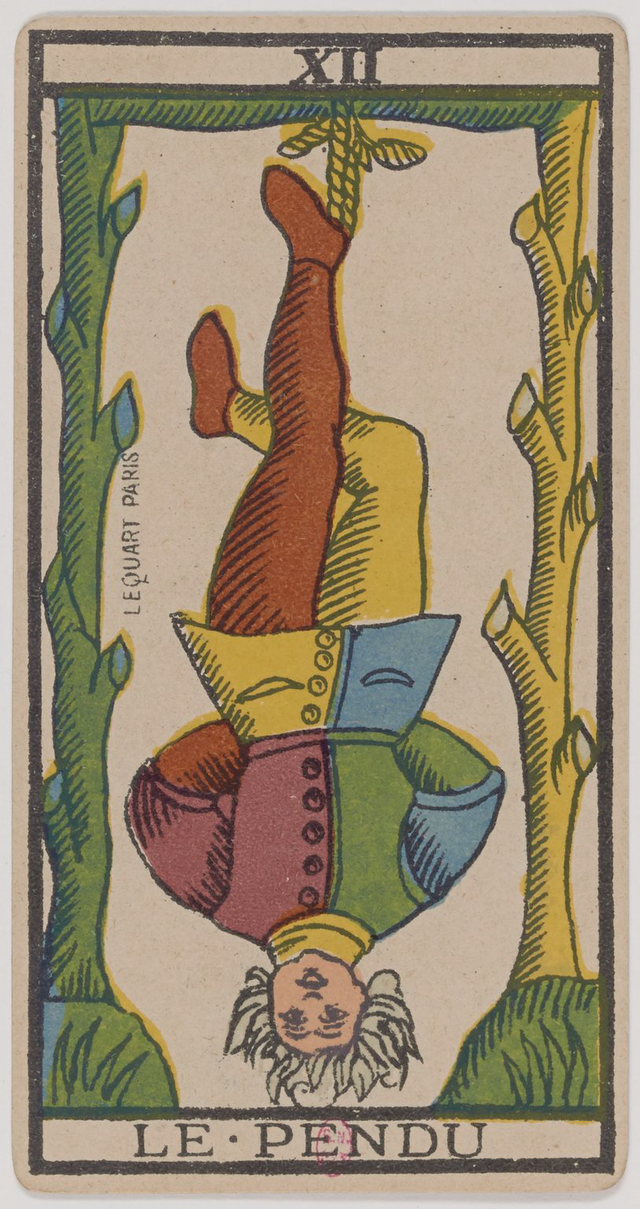
I shuffle the cards,
and gaze at the stars.
Jupiter is next to the
moon, they say,
Saturn and Antares are
on the way.
But, twinkle, twinkle you are my star,
how I wonder where you are.
The Hanged Man needs some
attention now,
but I consider the Fool
and stare at that card.
As the moon goes down
and the sun comes up,
know this,
I am the moon to your sun.
Venus on the horizon is
fated to be impatient but
The Knight of Pentacles has not come.
I reshuffle the cards and lay them out
straight and remember that
Jupiter follows the moon tonight.
cew
27 Wednesday Nov 2024
Posted in homelessnes, poetry
≈ Comments Off on Parking Lot Wraith
Parking Lot Wraith
A flash of movement behind my car,
I start, not knowing exactly what it is.
I look to the side, the image of a man,
tall and thin, dressed in all black and gray appears,
marching determinedly across the lot.
My car stopped, I take a moment to watch him. For
all the world with his manner and gait, he is late for an important meeting.
Meeting someone at the grocery store.
Still – he gives himself away.
He stops to pick up something from the sidewalk.
Only street people do that.
He parks on the tables outside the store, I go in to shop.
I poke around; lemonade, chopped kale salad, frosting gel.
All the important stuff.
I come out with my little bag.
The parking lot wraith is gone.
Disappeared somewhere, into the night.
Cew
11/24
19 Tuesday Nov 2024
Posted in Uncategorized
≈ Comments Off on The Elf, the Troll and the Wizards
The Elf, the Troll and the Wizards
The elf stood there, impatiently patting her foot, one arm akimbo at her waist. She was a study of disturbance in light greens; sort of a pale ocher skin with a hint of jade around the eyes.
“It’s about time!” she spat out.
“Now, now,” the elderly wizard said in his placating manner. “What’s all the bother?” He adjusted his bifocals at her as he made himself comfortable on a rustic bench.
“Him,” she pointed down the windy road. “That, that…” she spluttered. “That troll,” she replied with heavy disgust. “He’s got it.” The finger jabbed in the air while the toe patted angrily.
“Got what, my dear?” The old wizard was mystified. He was in the process of pulling out a long pipe and relighting it.
“The crystal ball, that new one you left with the baby wizard to babysit. You know the guy, the idiot. Also, the ball with all the green and yellow flashy things inside when you pick it up. That one. That’s probably why the troll took it, the stupid oaf.”
“Oh, oh,” the wizard replied, the light dawning. “Uh, oh,” he said again with a frown. “How do you think he got it? Does he know what it is?” And by the way; where is the idi…new wizard?” He puffed on his pipe and blew smoke rings in the air.
The elf laughed, a little tinkly laugh as some glittery dust rose off her shoulders. She shook her head. “Na, the troll is too dumb to know things like that. It was just pretty, that’s all and it makes neat colors when you move it back and forth. That’s all he’s thinking about, if you can call what he does thinking. As far as your new trainee,” she jerked her thumb over one shoulder, “he is chasing after the troll, by himself. Like that is going to do some good.”
“Hum,” the wizard scratched his chin, “I suppose this means we will have to tell Morada about it.” He nodded sagely.
“Who is this we?” she retorted. “I told you and that’s enough for me.”
He gave her his best old hound dog look for a moment and arched an eyebrow; but she was too quick.
“No, no,” she made a pushing movement with her hands. “You’re on your own with this one.”
“But you saw him take it.” The old man was quite capable of throwing a pleading note to his voice.
“No,” more head shaking from the elf. “I didn’t actually see him take it. I heard from the wood elves that he had it and just confirmed it. And, oh by the way, while we’re standing here, he’s making tracks.”
She was making a stand, the old wizard sighed in defeat. He would have to tell Morada himself and live with the consequences. It was his fault for leaving such a young wizard to watch over the new crystal ball. He probably was playing with it like a soccer ball. Another sigh.
“Thank you for you help Miss Elf,” he bowed, “I appreciate your services.”
The elf simpered a little and blushed. Finally, she said, “You’re welcome,” then zoomed off without a backward glance.
The elder wizard pulled out his wand and did a little zigzag movement, summoning his female counter part.
Later on Morada couldn’t resist the “Tisk, tisk,” sound she made. He hated when she did that, got on his nerves.
“Ok, ok, so the boy let it get away from him,” he admitted.
“Get away, get away!” She exclaimed. “It was stolen right from underneath him and by a troll! How could that happen?”
The wizard shifted back and forth on his bench uneasily.
“Do you think the dummy knows what he has?”
“I doubt it,” said the old man. “Something as subtle as a crystal that can tell us the past. No, no troll would be smart enough to figure that out.”
“I hope not,” she replied. “Many people would pay a lot to know what happened in the past.”
“Yes, I know,” he sighed. “I know they would.”
They met again much later. She was bouncing the crystal ball up and down in her hand. It glittered beautifully in the light; little blue, green and yellow sparks seeming to be coming out of its center.
He couldn’t resist, “So how did you get it?”
“Just pretended to be a fresh hog vendor looking to unload some quality hog. He just happened to not have any money and I just happened to be willing to take something in trade.” She smirked.
She put the crystal back in his hand, “Maybe this time, you do the watching, umm?”
The wizard gave her a little peck, “Daughter, you are marvelous.” She giggled.
“By the way,” the old wizard had to ask, “what became of our young wizard?”
Morada gave a short laugh. “I told him you were very angry with him and that he really needed to find this crystal ball.”
“And where did he need to look?”
“Ah, somewhere is the forests of Transylvania. Told him to be sure to be careful of of the werewolves.” She grinned.
“Daughter, you are so bad. So bad. Shall we get us a little mead? As a reward for all this hard work?”
She smiled, “Absolutely, dad. “
cew
14 Monday Oct 2024
Posted in Uncategorized
≈ Comments Off on Beginning of the End movie – 1957
In 1957, when I was five, I went to the movies with my brothers and we watched the movie Beginning of the End about giant locust who invaded Chicago.
Looking at the movie clips now, I clearly see, the insects were put in a small miniature town so they would look big and their pictures blown up in size. The movie frightened me so badly I had to run to the girls room and hide there until the movie was over. It scared the bejeepers right out of me.
Silly you said? This is such a corney, unrealistic sci-fi movie. Sure you can say that, you’re not five years old.
Lately I have been shopping in my location Lowe’s hardware store. Usually I like that store and have shopped there many timed. That is, of course, until the Halloween Horror!
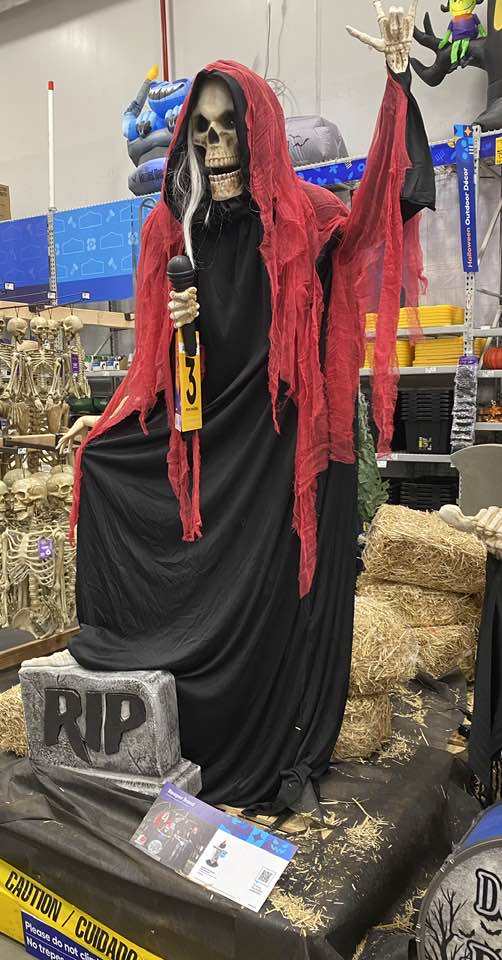
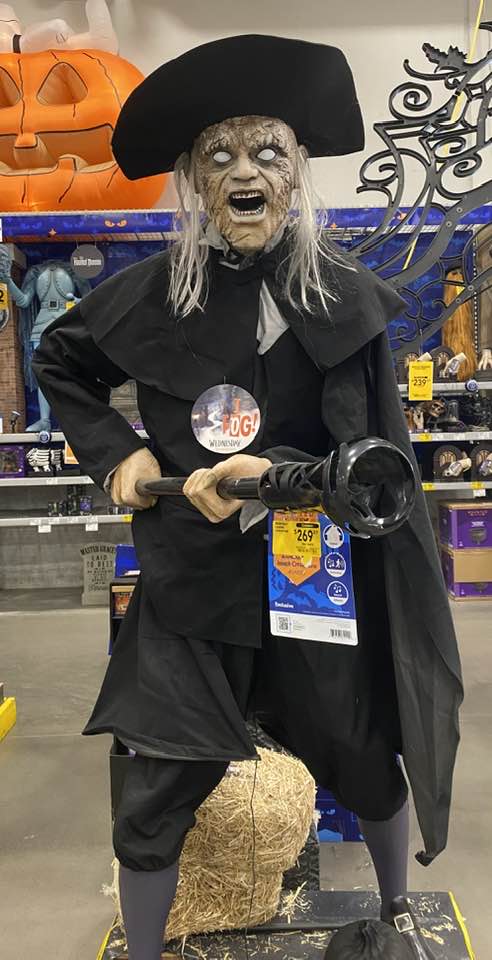
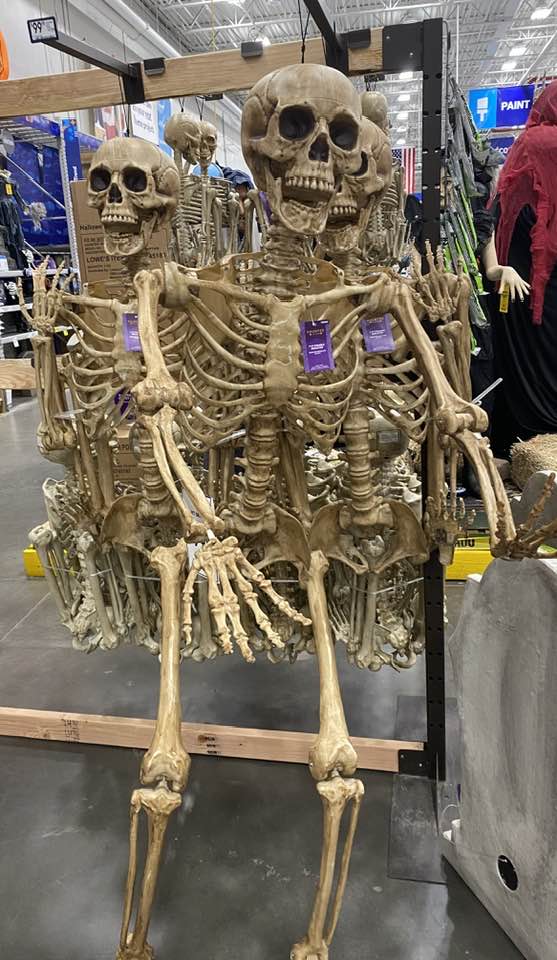
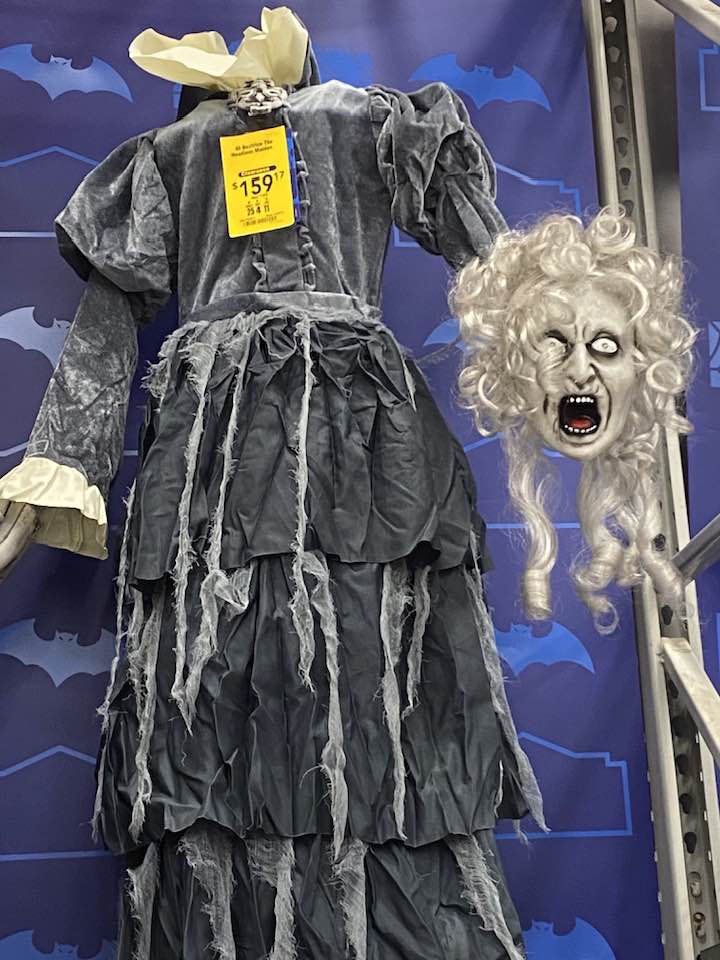
Not only are these characters horrible and gruesome, they are larger than life size and stand anywheres of six feet and above. What kid wouldn’t be scared to death! Wow. Thank you so much, Lowes, for putting the dollar sign in front of common sense and place the “Happy” back into Halloween! So much for it being a happy, fun holiday for kids!
cew
08 Tuesday Oct 2024
Posted in detective stories, families, Fiction, FRIENDSHIP, kids, mystery, teenagers
≈ Comments Off on The Portal – Part II
(Jeremy and Samuel continue their journey with the Portal.)
Jeremy stared at his hands and then the picture and shook his head. Wow! This is something! The first instinct was to run to mother and tell her about the picture.
No, she’ll just take it down and give it to dad and then he will send it back to Uncle Al. Maybe, not just yet.
“Samuel, I’m in here,” he yelled.
His younger brother appeared around the corner looking frustrated.
“Jeremy, where have you been? I’ve been looking for you everywhere. Mom wants to go to the store.”
“Store, ah, sure. Let’s go.” Jeremy hustled his brother out of the room and glanced back nervously at the picture. To his relief, it had returned to its dull brown color. No hint of the neon glow was visible.
#
Later, that evening, Jeremy sat on his bed and stared at the picture a long time. Getting up he went into the kitchen. Mom was making dinner.
“Mom, where is that envelope the picture came in?”
“I think I put it in the paper recycle bin. In the garage.”
Jeremy opened the door to the garage and went out. The three bins were lined up like waiting soldiers against the wall. The green bin for garden stuff, the blue for recycle and the grey for regular trash.
He pushed the lid open and peered inside. On the top of a bunch of paper, sat the yellow envelope. He pulled it out and looked at it.
The envelope was addressed to him which was surprising. He hardly knew his uncle Al and had maybe met him only a couple of times. Seemed like the guy was always busy off somewhere, doing something. Not much time for family visits.
The labels on the envelope were hand written in black ink. There was his name, Jeremy Beans and their address. In the left corner it read: Dr. Alfred Beans, Kitt Pk., Tohono O’odham Nation.
What the heck? Jeremy thought to himself. Something to do with kittens?
He didn’t want to ask too many questions in case his parents decided It Meant Something, and he had to start telling them more about the picture.
Mr. Beans got home with Tyler and they all sat down to their spaghetti dinner. Mrs. Beans poured herself and her husband each a glass of red wine.
“Ah, red wine,” Mr. Beans commented. He nodded to his wife, “good for the heart.”
“Yes, dear,” she replied with a smile.
“What kind of meat is this?” he asked her.
“85% lean from the health-food store.”
“Perfect,” he commented and dug in. “Looks like Tyler is well on his way to getting his science project underway for the next big school science fair. I think he is going to do us proud.”
Tyler said nothing and kept shoveling food onto his plate. Both his parents beamed at him. He ignored them.
“So, anything happen around here today while we were gone?”
“We got a picture from Uncle Al,” both Jeremy and Samuel said at the same time.
“Whoa, whoa, slow down. A picture? From my brother?” Disbelief showed on his face. “Alice?”
Alice Beans shrugged. “Some little brown thing that came in the mail. I don’t know. Maybe he is taking up art or something.”
“Art?” David Beans looked at his wife, incredulous. “Al doesn’t have an artistic bone….”
“Well, I don’t know,” his wife replied. “He’s your brother. I gave up trying to figure him out a long time ago.”
“Humpt.” David Beans got some French bread off the plate. “Maybe I’ll look at it after dinner.”
Jeremy dropped his fork, then picked it up. He didn’t want his dad to do something with the picture, like take it away. Glancing at himself in the mirror over the sideboard, he saw nervousness. He was definitely going to have to keep his cool.
Later in Jeremy’s bedroom, they stood in front of the picture. Mr. Beans, Tyler, Jeremy and Samuel all stared at the little brownish square.
“So, what do you think it is?” Mr. Beans asked.
Jeremy gave a non-committal shrug and moved away. He plopped on his bed and picked up a baseball and started tossing it from hand to hand.
Tyler touched it and lifted it away from the wall, looked underneath and placed it back against the wall.
“It’s not a canvas, it’s much heavier.” He looked at his dad. “I could test it in my chem lab in the garage if you want.”
Jeremy’s heart skipped a beat.
“No, no,” David Beans waved his hands in the air. “Probably just some experiment my older brother was working on that didn’t work, and thinking it was kind of pretty,” he gave a little laugh, “thought our young man here might like it.”
Jeremy was studying his baseball closely.
“But it’s not pretty,” Samuel added. “It’s ugly.”
“Well,” Mr. Beans shook his head, “gift horse and all that. The envelope, I understand, was addressed to you, Jeremy.” He turned and looked at his son. “You want to keep it?”
“Yeah, I guess,” Jeremy was casual, “something different.”
“Okay, then. Well, I think Mom has some dessert. Last one’s a rotten egg!”
The trio scooted out of the room quick march. Jeremy sat and stared at the picture. When he was sure they were gone, he got up slowly and walked over to the picture. He touched it with his forefinger. In that one little spot, a faint orange glow appeared and there was the slightest hum. He quickly pulled his hand away and walked out of the room, closing the door behind him.
Next day, dad was back to work, and mom was busy in the kitchen with a shopping list. Her big purse was on the countertop with her keys and hot coffee mug. Her notebook with the list stuck out of the bag.
“Samuel, Jeremy, here please!”
The two shuffled lazily into the kitchen.
“Ok, it’s less than two weeks before school starts and I have to go get your supplies. Jeremy you still want the thin notebooks with the wire ring on the edge, right?”
He nodded at her.
“And Samuel, first day of first grade. How exciting! We’ll get you lots of crayons and colored pencils.” Samuel bobbed on his toes. “Now, Tyler is in charge when I am gone. Let’s not park in front of the TV all day, ok. Go outside and ride your bikes or something. Get some air.” She gathered up her stuff.
“Where’s Tyler, Mom?”
“He’s in the garage working on his project. Call if you really, really need something. If you’re good, I’ll get Subways for lunch.”
“Yay!” Sam jumped up and down.
“Okay, kiss, kiss.” She leaned down and kissed Sam. She tried to kiss Jeremy, but he leaned away at the last minute. “Okay, later.”
Jeremy stood at the glass slider and watched as his mom get into the SUV and pull out of the driveway. When she was gone he ambled out to the garage with Samuel at his heels.
“Whatcha doing?” He asked his older brother.
“Nothing you would have any interest in so scram,” Tyler turned back to a tiny arc welder and kept dripping bits of metal on a metal plate.
“Okay, well then we’re going down the street to see Sean.”
“Whatever,” his brother waved at him. “Don’t get killed. And, don’t make me call an ambulance.”
“Sure,” Jeremy slowly left the garage, walked down the driveway, circled back to the front of the house and went back through a side door.
“I thought we were going to Sean’s,” Samuel complained. “I think they have a new puppy.”
“Be quiet.” Jeremy went back into the room he shared with Sam and closed the door. “Now you can’t tell anybody about this, okay. If you do, I’ll tell Mom and Dad it was you put the hamster in the toilet.”
“It was an accident,” his brother protested. “I was just trying to teach him to swim.”
Jeremy rolled his eyes and then peeked out the door one more time to be sure Tyler wasn’t lurking in the hallway.
“Go sit down,” Jeremy pointed. Samuel sat on his bed.
Jeremy went over to the picture and laid his full hand on it. The picture immediately began to glow and hum.
“What’s that!” Samuel jumped off the bed.
“Shush, Tyler will hear you.” Jeremy put a finger to his lips. The size of the picture got bigger and the neon colors came back. The humming got louder.
“Come over here and hold my hand,” Jeremy held out his hand and the younger boy took it with reluctance. “Now hold on.”
Jeremy pushed against the portal and both boys fell through and landed on green grass.
“Wow! What just happened, where are we?” Samuel got up and turned around and around in amazement.
Jeremy got up and brushed himself off. The portal hung in the air and still glowed, but the humming was gone.
“Okay, let’s just use our scout skills like Dad taught us to map where we are so we don’t get lost coming back.” He looked up at the sky, the huge fluffy clouds were still there, moving lazily through blue sky with a slight wind. “The sun comes up in the east and sets in the west. Where’s the sun now, Samuel?”
“East?” The younger boy asked.
“That’s correct. It’s to our east. Let’s stack some rocks here just to make sure we know this is the spot. The lake should be over there through those little woods.
“Lake?”
“Yeah, it’s a big lake, very cool. Last time I was here, there was this ship…”
“You were here before?” an incredulous Samuel asked. “Ooo, you didn’t tell Mom and Dad, you are going to be in so much trouble….”
“Hey. I told you before, this is our little secret. I mean, it came from Uncle Al. How bad can it be?”
Samuel shook his head.
“So, what. You want to stay here and wait for me?”
“Well, no.”
“Alright then, let’s do these rocks and go.”
They made a small marker with stones like Mr. Beans had taught them.
That done, Jeremy set off at a brisk pace in the direction he remembered the lake to be. They got through a short grouping of trees and …
“There it is, just like I thought!” Jeremy grinned at his brother. They moved down toward the lake. The enormous fountain was still there, in the middle, spewing giant columns of white, foamy water.
They came to the edge of the water. Samuel leaned over and touched the surface.
“Oh, cold.”
They stood there and admired the beautiful blue surface and then, like the last time, a large, masted ship started to come around the fountain in their direction.
“Jeremy,” Sam pointed excitedly, “a boat, a boat!”
“It’s not a boat, stupid, it’s a ship. A three-master, in fact.”
They both watched astonished as the ship sailed, seemingly by itself, up to the beach where they stood.
There was a large rope hanging over the side.
“Look, Samuel, a rope. We can climb on that way.” Jeremy started to wade out into the water.
“What if we need a ticket and don’t have one? They might throw us off.”
“Oh, come on scaredy cat.”
“I’m not a scaredy cat.”
“Are too.”
“Look, Jeremy, there’s a little walkway.” Sam pointed.
A landing pier that Jeremy had not noticed before was to their right. It led right up to the ship’s side.
“Ok, come on then.”
They hurried over and ran down the pier. Jeremy pushed Samuel up the rope and climbed up after him. Pretty soon they were onboard. There didn’t appear to be anyone else there.
“Look!” Jeremy yelled, “the steering wheel.” He ran toward it. There was a large black hat perched on top of the wheel. He pulled it off and stuck it on his head. It fit perfectly.
“What about me?” Samuel whined.
“Look, there’s a red scarf thing over there. You can put that on and be part of the crew.”
Samuel ran and got the bandana. Jeremy helped him tie it around his head.
“Would you look at us?” Jeremy laughed. Samuel did a little jig around the deck.
“Where to now, Jer?” the little sailor asked.
“I don’t know. Maybe I’ll just try to steer this thing….”
To his amazement, the wheel responded to his touch and the ship began to move. Slowly, Jeremy turned the wheel and they ended up circling the fountain. Palm trees on the shore bobbed their head in salute as the boys sailed past.
“This is so fun!” Samuel ran from one side of the deck to the other, looking over the side.
“You better not fall in,” his brother yelled at him. “I don’t want to have to fish you out.”
This would be so cool to take home and show to Tyler. I bet that would show him a thing, Jeremy thought to himself.
As if on cue, there was a slight shudder to the ship and ever so slowly, the front end started to lift. Jeremy realized with shock that they were pulling out of the water into the air.
Samuel grabbed a mast. “What are you doing?” he screamed.
“We’re…uh…flying!” his brother replied.
They were completely airborne now and Jeremy steered the ship around the lake a couple of laps.
“Jeremy, I think I want to go home,” Samuel said, “this is kind of scary.”
“Okay, no problem,” Jeremy was more uncertain than he sounded. “Home it is.” He headed the ship back to the beach, past the grove of trees and toward the portal. He figured they were going to have to jump off the ship when it got close to the portal and let it go flying off into space.
However, a curious thing started to happen as the ship approached the portal. The entire ship started to shrink and get smaller. Jeremy and Samuel also began to shrink down.
Samuel ran to his brother and clung on for dear life.
“Jeremy!!!!”
Jeremy had nothing to say. The ship was shrinking, and it seemed to be pointing itself to the portal almost without his help. They got right up to the little hanging square.
“Jeremy, we’re going through!” Samuel yelled in Jeremy’s ear.
Then with a little Pop! sound they were through the portal and back in the boy’s bedroom. There were the two twin beds, made up with matching orange and brown plaid coverlets. Samuel’s Ted Bear was still on his bed. Jeremy’s baseball and mitt were on his bed. San Francisco baseball posters were on the wall. It was like they had never left.
“Jeremy, we’re back home.”
“Yeah, we are,” Jeremy whispered. “But, we’re small and we’re still on this ship.”
“Ooh,” Sam said.
The ship was floating through the air unaided.
“Can’t we just get down now?” Samuel pleaded.
“Just a few more minutes. Let’s see where it takes us.”
Jeremy could still steer, and he circled the bedroom. The ship then, seemingly with a mind of its own, headed toward the door. Jeremy thought for a minute they would hit the door and fall off.
Again, to his amazement, with a slight Pop! sound they were through the door and out in the hallway.
Beamer was lying down in the hallway having a morning snooze. Leisurely, they sailed over his head. With a jerk, sensing something, Beamer woke up and caught sight of the ship. He jumped up and started barking. Jeremy steered the ship higher, so Beamer couldn’t get it with his teeth. This close he could see the dog’s tawny brown/gold eyes and shaggy brown fur. They kept sailing down the hall and Beamer ran after them, nails clicking on the parquet flooring.
Soon, they were in the dining room and Paws, the cat, came around the corner to see what was going on. Shiny black fur with four white paws, he jumped up on the dining room table and started swatting at the ship.
“Paws stop it! Stop it,” Jeremy yelled at the cat who ignored him. They were about to sail past the dining room table when Paws did a giant leap and hooked a set of claws into the side of the ship. The ship began to list dangerously.
“Sorry, pal. Hate to do this.” Jeremy dropped two planks down and a surprised Paws fell to the floor. Recovering quickly, both animals kept chasing the ship.
“Look, Jer!” Samuel exclaimed, “the kitchen window.” Indeed, the kitchen window had been left open and this one had no screen. Jeremy steered the ship right through the open window.
Outside now, the cool autumn breeze buffeted the ship. The sails on the mast blew out to their full extent. Jeremy steered the ship around the backyard several times.
“Can I have a turn?” Samuel asked his brother. “I haven’t had a turn yet.”
“Well, I guess. But don’t run into anything.”
Happily, Samuel grabbed the big wheel. They were nearing the apple tree when there was a screeching sound and Jeremy looked up. In the sky, dropping quickly was the neighborhood hawk.
“The tree!” he exclaimed and jerked the wheel of the ship into the branches of the tree. The hawk whizzed by and screeched.
“Boy, that was close.” Samuel said. “You take it back,” and he stepped away from the wheel and sat down. “How are we going to get back now with that bird and everything?” He plopped his chubby face in both hands.
The ship balanced precariously on a tree limb.
“I know.” Jeremy started to whistle. “Call to Beamer and Paws, they can come out through the dog door.”
Both boys started yelling for the animals as loudly as they could. In a flash, Beamer was scooting through the dog door with the cat fast behind. Beamer spied them in the tree and started jumping up and down barking. There was another screech, higher up and the sound faded away.
“I think we’re okay now,” Jeremy peered up through the branches. “Let’s go.”
Samuel was holding onto the front of the ship and Jeremy turned the wheel and steered it out of the tree and back toward the house. Beamer kept barking and Paws was following close, doing the stealth bomber thing.
Jeremy steered the ship back inside and straight back to their bedroom. With another Pop! sound they were back in their room. Jeremy steered the ship back to the picture and told Samuel to climb off. Sam jumped down to the dresser and Jeremy followed him. The ship seemed to pause for them. He patted it one last time.
“Time for you to go home now, old thing.”
Promptly, the ship sailed back into the picture which closed behind it. There was a slight sucking sound. Sam and Jeremy jumped off the dresser just as they resumed their normal size. Jeremy looked, and the picture had returned to its dull brown color again.
They both lay on their beds laughing. There is a slight knock on the door and it opened. Tyler stood there.
“What’s going on, you two?”
They stared at him innocently. “Nothing,” they both said at the same time.
“I thought I heard some funny noises. And why was Beamer barking like that?”
They shrugged.
“Well, I better not…”
“You know, Tyler. You sound just like Dad.” Jeremy said to his older brother.
“Yeah, and your point?”
“Just saying.”
“Right, moron.”
Tyler closed the door with an expression of disgust. They could hear footsteps retreating down the hall.
“I don’t think you’re a moron,” Samuel said to Jeremy.
“Well, thank you, Sam. That’s very nice.”
“What’s a moron?”
Jeremy laughed then Sam laughed. They both rolled back and forth on their twins.
At least for Jeremy, he couldn’t wait to go back in the portal again.
You can see more of Jeremy’s and Samuel’s tales on Kindle Vella. https://kdp.amazon.com/kindle-vella/story-details/PWSVA6FJ6BF
07 Monday Oct 2024
Posted in Uncategorized
≈ Comments Off on The Portal
THE PORTAL – Courtney Webb
Jeremy Beans, age ten, lived in an ordinary house on an ordinary street. He had a mom, a dad, a younger brother,
Samuel, age six and an older brother, Tyler, age twelve. His friends at school
just called him Bean for short.
Samuel was kind of fun because he could be talked into playing games. Tyler was no fun because he was always gone Doing Things.
One day, on a Saturday, Tyler was gone with Dad, working on his school science project. Jeremy was home with Mom, Samuel and Beamer, their dog. His job was to get his room cleaned up. Probably the worst job in the world and the one he hated the most. He and Sam were in the living room and they still had fifteen more minutes TV time.
The doorbell rang, and he could hear his mom.
“I’ll get it.”
The door opened, and mom had a short conversation with the UPS man and brought in a brown paper package.
“Hum,” she said, walking to the kitchen table.
“Who’s it from?” Jeremy asked. He followed his mother. Samuel was crowding his elbow, looking too.
“Your uncle Al.” She frowned
looking at the package. “You know, the scientist.” She went to get a pair of
scissors. “It’s not Christmas or anyone’s birthday, I don’t…”
She opened the package and a brownish square fell out. She picked it up and looked at it, frown lines creased her brow.
“I don’t know…” She turned it over
and over. “I can’t see what it is supposed to be. A picture…? It seems kind of
heavy…”
Sighing she put the brown square down on the dining room table. Jeremy looked at it.
“Look, Mom. There’s a kind of design on this side,” Jeremy peered at the square.
“Maybe he is trying out some new art design or something. I don’t know, he always was a little weird,” she replied.
The telephone rang, and his mother turned her head.
“Can I have it, Mom?” Jeremy asked.
Distracted, his mother was walking to the kitchen. “Ah, sure. I guess.”
She disappeared into the kitchen and Jeremy could hear her talking to someone.
“What is it, Jeremy?” Samuel asked.
“It’s a…it’s a…hum. A kind of picture.”
“Let me hold it.”
“No, you’ll just break it.”
“No, I won’t!”
“Yes, you will, you break everything.”
“Aw…”
“And don’t start crying either,”
Jeremy commanded. “Come on, we’ll put it up in our room and I’ll let you help.”
They both walked the picture back to their bedroom. There was a little hook on the back of the picture.
“Sam, go get the small hammer and a
couple of nails from the drawer in the kitchen. Can you do that?”
Samuel nodded and ran for the kitchen. Jeremy walked around their room trying to figure out the best spot for the picture. He finally decided to put it across from his bed, so he could see it. Then, maybe he could figure out what it was supposed to be.
Samuel came running back in with the hammer and two nails.
“Mom got them for me.” He held them out for Jeremy.
Jeremy placed the picture, the
hammer and the nails on the dresser. He pulled out a short pencil, made a
little X on the wall and hammered in one nail. He didn’t like the way it
looked, pulled it out and hammered in another one.
Samuel leaned on the dresser, breathless. Carefully, Jeremy picked up the picture, looked at the little hook on the back and pushed the picture over the nail. They both backed up and looked at it.
“Now what?” Samuel asked.
“Now…I don’t know. It’s just a picture. It doesn’t do anything.” They stood back and stared at the picture a moment.
“I think Mom is making some cookies,” Samuel said.
“What kind?” Jeremy asked.
“Chocolate chip.”
Jeremy put down the hammer and they
both made a beeline for the kitchen.
Later that afternoon, Jeremy was taking a light nap and heard a humming sound. He opened his eyes and looked around. What? He looked over and saw the picture was humming and glowing. He got up and went over to it. It started to turn different glowing colors. The colors were neon like and reminded Jeremy of glow magic markers; hot pink, vivid yellow, acid green, red-orange and a bit of navy blue. They swirled around each other.
He put his finger on the surface.
It was warm. With a zap! and pop! Jeremy was sucked into the picture. He fell
on a soft surface. Shocked and scared, he got up and saw he was on some green
grass in a misty clearing. Looking around it looked like the mist was beginning
to clear.
This is some kind of small forest. But where? Curiosity overtook him.
Walking through the forest he came upon a large lake. It was very blue. Large, fluffy clouds filled the sky. In the middle of the lake a huge water fountain sprayed water in every direction.
Jeremy gazed around himself in amazement.
Where the heck?
Then, slowly from around the other side of the fountain, through the water mist, he saw the outline of a large, masted ship. It was moving his way.
He realized his mouth was hanging open and shut it when, faintly, in a distance, he could hear Samuel calling his name.
I should get back to my room, Jeremy thought.
The next moment he was standing in his room. He turned around and around. The lake was gone, the ship was gone, the forest was gone.
He stared at his hands and then the picture and shook his head. Wow! This is something! The first instinct was to run to mother and tell her about the picture.
No, she’ll just take it down and give it to dad and then he will send it back to
Uncle Al. Maybe, not just yet.
Continued Part II
See more of Courtney’s writings on Kindle Vella.
28 Saturday Sep 2024
Posted in music, Uncategorized
≈ Comments Off on Michael McDonald – Prison of Loneliness
Michael performed with Wendy Moten. (2012 – YoutTube)
Writer and vocals: Michael McDonald, piano – Bernie Chiaravelle.
His usual backup was Pat Coil – keyboards, Mark Douthit – saxophone, Jacob Lowery – bass guitar and vocals.
Love the brass in the background but wish I knew who his backgrounds players were!
His latest album is Blue Obsession, will have to think about checking it out!
Kenny Loggins looks he might be back on the circuit after a really long absence.
16 Monday Sep 2024
Posted in Uncategorized
≈ Comments Off on Trump – It’s All About Hero Worship
Tags
I’ve had to consider for some time now why it is that Trump keeps hanging on with a vast array of supporters after all the drama and bad press.
I look at women my age and wonder over and over again. Recently, I saw a Facebook posting by an acquaintanance of mine. Again, a woman my age who should know a thing or two. It was a painting depiction of Trump, walking toward the camera, in a heavy leather overcoat, in the rain, with a legion of followers walking behind. Suddenly, it all fell into place. Hero worship.
Trump was her hero and he was going to ‘solve it all’ and ‘get things fixed.’ This is about as unrealistic as thinking we can undo Colonial Imperialism or send Christopher Columbus back to where he came from. Someone recently made the comparision in time and place that really made sense. The current population of Phoenix, AZ is approximately two million people. That was the population of the entire Continental America at the time of the signing of the Declaration of Independence.
Thinking that we can go back to ‘a simpler’ time where one silver bullet takes care of everything is extremely wishful thinking. I think the song was “We Don’t Need Another Hero,”. If you were a fan of Ronald Reagan, you would remember that as a seasoned politican when he got into the White House, he surrounded himself with a lot of very smart people. It takes a village or something like that, and it certainly takes an organized, educated, competent staff to ‘run’ the White House and help make a lot of extremely difficult decsions. Trump is not that guy.
(Oh, by the way, the hero worship thing is certainly not limited to women!)
Letter: Believing in Trump is hero worship at its worst
BattleBoro Reformer
To the editor: Watching history sadly repeat itself, I recently had the following scary thought: It wouldn’t take a huge leap of my imagination to envision the Republican Party being willing to run Adolf Hitler as a presidential candidate if that would give them the power that they are so desperate to seize. Being that scientific studies have apparently shown that the human brain operates on a negative bias in order to survive, it’s an easy political card to play to get the scared, angry masses stirred up … find and blame a scapegoat. Pretty obvious.
As a person without a college education who has made my living with my hands (now missing two fingers), I understand (to whatever degree I can) the need for someone to represent the common disenfranchised person in this country whose life and livelihood has been gutted by what I see as a capitalist system that lacks adult supervision.
Since the era seems to have passed where America no longer has a John Wayne to believe in, yet still clings to the notion that we need a hero to save us, many have, out of desperation chosen just that… a false god in Donald Trump. History shows that people will choose a strong appearing person who is wrong over a weak appearing person who is right. Perhaps that comes from the same inability for an individual to choose the vulnerable path necessary to grieve and be honest about one’s own internal pain. To say to ourselves that “this hurts” and feel it instead of believing what we think of as our thoughts, when the stories our thoughts create are actually cultural programming spawned from the same negative got-to-survive thinking that leads to wars.
I wish that there was an honest hero that everyone could believe in in this country to unite us. Sadly, I can’t see how they would gain traction. It appears that there’s too much corporate power that would drive them into the ground.
T Breeze Verdant
Williamsville, Dec. 25
05 Monday Aug 2024
Posted in Uncategorized
≈ Comments Off on Pres Biden takes on rent control initiatives that AZ lawmakers (and CA, too) won’t do.
https:www.whitehouse.gov
The Biden-Harris housing plan will ensure a cap on rent increases by landlords to 5% per year. Big landlord companies like Camden Properties Trust, will agree to the guidelines or lose Fed tax breaks.
In a state where rent increases of 30% are common, the raging homeless situation is being constantly fueled by ever increasing price gouging by landlords and resultant evictions. This situation raises profits for landlords and increases burden on the public for continual needs and problems caused by the homeless. The site Accountable.us monitors the use of an app called Realpage that helps landlords to determine price hikes.
Currently the State Atty General for AZ is in the process of suing Camden properties and others for price gouging, unethical and immoral practices that are contrary to the common good. The office of Kris Mays, Atty General has also filed against Buenas communities for substandard living conditions not disclosed to new renters as well as failure to properly maintain their units.
Many apartment complexes are owned by out of state ‘investors’.
Then, owners are protected from retaliation from angry renters when faced with escalating rent and other problems, by a complex system of property management companies who never reveal the owners identity. Apparently, property owners learned their lessons well from the French Revolution. They can’t hurt me if they don’t know who I am or where I live. Thoughtful strategies. Meanwhile the rest of us are left with out-of-control costs of living and escalating homeless numbers.
So, good luck Chris Mays and Joe Biden. Maybe the tax payers can get a break! CW
About time. Good luck.
 webby1dotnet