…….
Chris Christie talks Turkey about Trump
17 Thursday Aug 2023
Posted in Uncategorized
≈ Comments Off on Chris Christie talks Turkey about Trump

17 Thursday Aug 2023
Posted in Uncategorized
≈ Comments Off on Chris Christie talks Turkey about Trump
…….
31 Monday Jul 2023
Posted in detective stories, Fiction, mystery
≈ Comments Off on Raymond Chandler – On Writers and Living in Los Angeles
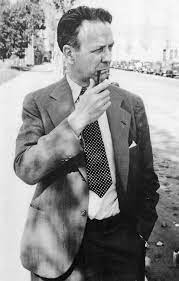
A drunk, a womanizer, a perfectionist and irrepressible demander of himself and everyone around him, Raymond Chandler was the darling of studios and the silver screen for twenty years. Now touted as one of America’s greatest writers, alongside Dashiell Hammett and Ernest Hemingway, his most famous works include: Philip Marlowe, private detective, The Big Sleep, The Little Sister, The Long Goodbye, Lady in the Lake and others.
Raymond Thornton Chandler was an American-British novelist and screenwriter. In 1932, at the age of forty-four, Chandler became a detective fiction writer after losing his job as an oil company executive during the Great Depression due to drinking, absenteeism and bad boy behavior.
Chandler was born on July 23, 1888, in Chicago, Illinois. He died on March 26, 1959, in his longtime home of La Jolla, California. He was proceeded in death by his wife of 30 years, Cissy Pascal (m. 1924–1954).
Hollywood was built on the work of underappreciated writers. Just ask Chandler, Faulkner and Fitzgerald
BY STACY PERMAN
5/8/23
In 1945, barely two years into Raymond Chandler’s career asascreenwriter, the man whose hard-boiled fiction did much to make film noir into an art form had already wearied of the town and its treatment of writers.
“Hollywood is a showman’s paradise. But showmen make nothing; they exploit what someone else has made,” he wrote in an acerbic essay published in the Atlantic.
In barbed zinger after zinger, the man who gave us private investigator Philip Marlowe described Hollywood as a cauldron of “egos,” “credit stealing” and “self-promotion” where scribes were ruthlessly neglected, marginalized and stripped of respect; toiling at the mercy of producers, some of whom, he wrote, had “the artistic integrity of slot machines and the manners of a floorwalker with delusions of grandeur.” (The Los Angeles Times.)
The Great Wrong Place – Raymond Chandler’s Los Angeles at 70 – Black Mask 9/8/17 – Mike Valerio.
They seemed to fit together right from the very beginning. The right town and the right words.
“The lights of the city were an endlessly glittering sheet. Neon signs glowed and flashed. The languid ray of a searchlight prodded about among high faint clouds…. The car went past the oil well that stands in the middle of La Cienega Boulevard, then turned off onto a quiet street fringed with palm trees….” —from “Blackmailers Don’t Shoot”
It was the very first piece of detective fiction written by one of the greatest of all mystery writers, Raymond Chandler. “Blackmailers Don’t Shoot,” published in 1933, appeared in the rough-edged pulp pages of Black Mask magazine.
In the 70 years since he penned that first tale of crime and corruption, Chandler has come to occupy a singular place in the cultural history of his adopted town. Called by S.J. Perleman “the major social historian of Los Angeles,” Chandler used his tough, bourbon-soaked poetry to re-create the city as a character, as real and intense as Chandler’s private eye hero, Philip Marlowe.
With his distinct descriptions of all that was unique about L.A. (“The muzzle of the Luger looked like the mouth of the Second Street tunnel, but I didn’t move.”), Chandler introduced our beautiful and brutal city to more readers than any other author, despite once declaring Los Angeles had “the personality of a paper cup.”
In post-World War II America, Los Angeles was a frontier town, ruled by a crime syndicate that was under the control of a cabal of shady politicians, lawyers and police officials. Chandler turned the greed, cruelty and despair of his crime-infested metropolis into the stuff of fiction. For millions of people around the world, he defined not only a city, but the genre of the hard-boiled detective story and even the style of movie-making that came to be known as film noir. His influence on mystery novelists from Ross Macdonald to Robert B. Parker, and on movies and television shows from Chinatown to The Rockford Files to L.A. Confidential have been well-documented by scholars and critics. Chandler’s path in creating that legacy is in evidence at the Special Collections Division of the UCLA Research Library, which contains the most extensive collection of Chandler’s work in the world.
Manhunt for an Identity
Raymond Thornton Chandler was born in Chicago on July 23, 1888. His alcoholic father frequently abandoned his family for extended periods, a habit that ultimately caused the divorce of Chandler’s parents. Eventually, young Raymond’s father vanished for good.
Chandler’s mother filed for divorce. She saved enough money for a move to England, where she and Raymond lived with relatives. Beginning at age 7, he received a proper British education at a school in London. He won awards for mathematics and was an avid reader of the classics. At 17, he attended London’s Dulwich College and later studied in France and Germany.
After a time, Chandler returned to London and became a naturalized British subject in order to take a civil service exam. He passed and soon acquired a government clerking position. But Chandler grew bored working as a civil servant and left the British government to work as a journalist and essayist for London’s Daily Express and Bristol’s Western Gazette, for whom he wrote articles on European affairs, along with poetry, reviews and literary essays.
Chandler found his way back to the United States in 1912. Searching for his niche, he worked on an apricot ranch, made tennis rackets in a sporting goods firm and, after studying bookkeeping, became a junior accountant. Chandler’s restlessness during this period was at least in part due to a problem with alcohol. It was a problem that would plague him for the rest of his life. “I think a man ought to get drunk at least twice a year,” he once said, “just on principle, so he won’t let himself get snotty about it.”
In 1917, Chandler began a year of service with the Gordon Highlanders of the Canadian Army, just after the start of World War I. As a member of the Royal Air Force he saw action in France. Chandler’s first real brushes with violence and death changed him. As a 30-year-old sergeant, he was ordered into trench warfare, leading his platoon into direct machine-gun fire. After that, he said later, “Nothing is ever the same again.” He was discharged in 1918 after sustaining a concussion in combat.
After the war, Chandler returned to America, this time to California (“The department store state,” he would later write. “The most of everything and the best of nothing.”) He worked as a banker in San Francisco and a reporter for Los Angeles’ Daily Express (he was fired after six weeks for being “lousy”) before finally joining L.A.’s Dabney-Johnson Oil Corporation as a bookkeeper.
By 1924, Chandler married Pearl “Cissy” Pascal and was promoted to auditor for the oil company. Soon, he rose to the rank of vice-president, but over the next several years, his battle with alcohol took its toll. After several self-destructive displays of excessive drinking and erratic behavior, he was fired in 1932 for absenteeism, womanizing and drunkenness.
Raymond Chandler was 44 years old.
The Pulp Jungle
The firing was a wake-up call for Chandler. The Great Depression was on and work was scarce. Chandler stopped his excessive drinking (temporarily), picked up a copy of Black Mask and vowed to dedicate his life to writing. The man who would soon turn Los Angeles into a film noir landscape never looked back.
For a novice writer during the Depression, there was no better place to start than the pulps, those thick, cheaply produced magazines filled with dark and bloody tales of mystery, murder and action, all written in the most purple of prose.
A fan of Dashiell Hammett’s Sam Spade and Erle Stanley Gardner’s Perry Mason, Chandler registered himself as a writer in the Los Angeles City Directory and began his apprenticeship in detective fiction.
Chandler decided to tackle the mystery pulps because he believed that some of them, in spite of their preoccupation with cheap-thrills melodrama, actually possessed an honesty and moral code that appealed to him. Also, he believed that the literary bar was low enough in the pulp fiction trade that he might actually have a good shot of earning even as he learned.
For a full year after his ignoble exit from Dabney Oil, Chandler worked daily at learning the craft of writing detective fiction. At first, he leaned heavily on the styles of Hammett, Gardner and even Ernest Hemingway as models for plot, character, pace and style. It didn’t come easy. That first short story, “Blackmailers Don’t Shoot,” running just under 18,000 words, took him five long months to finish. He submitted the story to tough-minded Joseph Shaw, the editor of Black Mask, the leading hard-boiled detective pulp of the day.
Shaw accepted the story and published it in the December 1933 issue. Chandler’s career as a mystery writer had officially begun. For his months of labor, the author received $180, at the standard pulp rate of a penny a word.
For the next six years, Chandler continued his apprenticeship in the pulp magazines, perfecting his craft and building, story by story, the character of his many-named private detective hero (known in various stories as Mallory, Dalmas, Carmady, Gage and Delaguerra, among others).
Though the detective story was a popular form, it did not pay very well. Never a prolific writer, Chandler struggled to earn even a modest living from his short-story sales. In 1938, his three published novelettes earned him a total of $1,275. Often short of cash, Chandler and his wife moved from furnished apartment to furnished apartment throughout Southern California—sometimes two or three times a year. He later recalled: “I never slept in the park but I came damn close to it. I went five days without anything to eat but soup once.”
Marlowe, P.I.
As the Depression wore on, Chandler continued his education in the pulps. Over the next six years, he sold 10 stories to Black Mask, seven stories to Dime Detective, and one to Detective Fiction Weekly. Chandler learned much from toiling in the pulp jungle, but by 1938 he was ready to move on. In the spring of that year he began writing The Big Sleep, his first novel featuring Philip Marlowe, the romantic and chivalrous private eye with the thoughtful, introspective approach to investigation that would mesmerize audiences in a total of eight novels, all set in steamy and seamy Southern California.
When The Big Sleep was published by Alfred A. Knopf in February 1939, the novel sold 10,000 copies in the United States and paid Chandler $2,000 in royalties. Those figures didn’t make him a best-selling author, but they were remarkably high for a mystery story, particularly for one by a first-time novelist.
Chandler wrote for the pulp magazine market for only a few more years, publishing three stories in 1939, none at all in 1940 and a final one in 1941. For the rest of the decade, Chandler devoted himself to the novel, often cannibalizing plot points, action set-pieces and whole characters from his own short stories. The years during which Farewell, My Lovely (1940), The High Window (1942) and The Lady in the Lake (1943) were published also saw the slow death of the pulp and the rapid rise of the paperback. These small, cheap reprints of hardcover novels were not only in bookstores but in drugstores, newsstands and even railroad stations.
For Chandler, the paperback revolution and the reprinting of his novels resulted in more income and something new: fame. By the beginning of 1945, 750,000 copies of The Big Sleep and Farewell, My Lovely had been sold. Just four years later, a Newsweek report on the crime-fiction business noted that there were more than 3 million copies of Chandler’s mysteries in the hands of readers.
As a writer who saw himself following the path of Dumas, Dickens and Conrad, Chandler devoted his life to the principle that genre writing is writing first and generic second. “My theory,” he once wrote, “was that readers just thought that they cared about nothing but the action; that really although they didn’t know it, they cared very little about the action. The thing they really cared about, and that I cared about, was the creation of emotion through dialogue and description.”
Chandler’s L.A.
Those descriptions included colorful portraits of Los Angeles landmarks and landscapes, like that of downtown’s Angel’s Flight cable car in The High Window: “I parked at the end of the street, where the funicular railway comes struggling up the yellow clay bank from Hill Street, and walked along Court Street to the Florence Apartments.”
The Santa Monica Pier, the San Bernardino Freeway, The Dancer’s Nightclub at La Cienega and Sunset, Beverly Hills (“the best-policed four square miles in California”), The Bradbury Building (renamed The Belfont Building by Chandler and later used as the site of Marlowe’s office in the 1969 James Garner film, Marlowe) all fell under the eyes of Chandler and his private detective. Marlowe’s Hollywood office, Chandler told us, was on the sixth floor (number 615) of “The Cahuenga Building” (in reality, The Security Trust and Savings Bank at the corner of Hollywood and Cahuenga). Once the tallest building on the Boulevard, the six-story structure erected by John and Donald Parkinson, designers of Bullock’s Wilshire and Santa Monica City Hall, became a high-profile home for Hollywood’s best-known private detective.
“If, as is often said, every city has at least one writer it can claim for a muse,” author and critic David L. Ulin once noted, “Raymond Chandler must be Los Angeles’.” Chandler’s background as both a journalist and a poet made him, said Ulin, “the one Los Angeles writer whose books have as a consistent center—the idea of the city as a living, breathing character–capturing the sights, the smells, the bleak glare of the sunlight, the deceptive smoothness of the surface beneath which nothing is as it seems.”
Ross Macdonald may have put it even better: “Chandler wrote like a slumming angel and invested the sun-blinded streets of Los Angeles with a romantic presence.”
Yet Chandler’s Los Angeles is no City of Angels. It’s an urban swamp filled with darkened back alleys, endless expressways and oppressive architecture. It’s a city of decay and corruption, right down to the foliage. When Chandler, as he does in Farewell, My Lovely, describes “a tough looking palm tree,” it is a tree that could only grow in Los Angeles. When, in the same book, an afternoon breeze makes “the unpruned shoots of last year’s poinsettias tap-tap against the cracked stucco wall,” lovers of Los Angeles—even those who have never lived here–recognize it as home. And when private eye Philip Marlowe makes his lonely drive from The Hobart Arms on Franklin Avenue to Arthur Gwynn Geiger’s House on Laurel Canyon Drive, as he does in The Big Sleep, we travel with him on atmospheric “mean streets” of a town without pity.
Making a Case for Mystery
Despite the income all those paperbacks generated, their lurid covers advertised Chandler’s stories as nothing more than collections of sex and violence. This kind of image angered and depressed Chandler, who considered the mystery story a valid form of literature. He dove deeper than ever into his drinking, coming up only often enough to produce some of the English language’s greatest crime fiction. In a letter to Lucky Luciano in preparation for an interview (at the suggestion of James Bond creator Ian Fleming), Chandler told the gangster: “I suppose we are both sinners in the sight of the Lord.”
In defiance of the sensational images screaming from the paperback racks that did little to promote Chandler as an important or even talented writer, a small number of Chandler supporters were beginning to argue for his literary value, as was Chandler himself. Writing to his overseas literary agent, Helga Green, Chandler said, “To accept a mediocre form and make literature out of it is something of an accomplishment… We are not always nice people, but essentially we have an ideal that transcends ourselves.”
Chandler was lucky enough to start writing novels at a time when Hollywood, based on the success of John Huston’s adaptation of Hammett’s The Maltese Falcon, was turning to the hard-boiled detective genre for stories. In 1941, RKO Pictures bought the rights to Farewell, My Lovely for $2,000, using the novel as source material for The Falcon Takes Over. A year later Twentieth Century Fox paid Chandler $3,500 for The High Window. Chandler wasn’t seduced by the attention, however, claiming, “If my books had been any worse I should not have been invited to Hollywood and if they had been any better I should not have come.”
Like many novelists during Hollywood’s Golden Age, Chandler turned to screenwriting to earn the money his books could not. In 1943, he signed on with Paramount Pictures to collaborate with Billy Wilder on a film version of James M. Cain’s Double Indemnity. He was paid $10,500, more than his entire earnings to date for any single novel. Chandler continued working for the studios for the next four years, earning increasingly higher salaries.
Seldom had a novelist’s work been so successfully or so frequently translated to the big screen. Chandler’s career as a screenwriter peaked in 1946 and 1947 with the release of director Howard Hawks’ film version of The Big Sleep (“The Violence—The Screen’s All-Time Rocker-Shocker!!” screamed the studio advertising), adaptations of The High Window (as The Brasher Doubloon) and The Lady in the Lake, plus Chandler’s Academy Award nomination for The Blue Dahlia (the screenplay for which Chandler crafted under an agreement with Paramount that he be allowed to write at home while drunk). In 1947, he was signed by Universal to create an original screenplay called Playback, but the film was never produced. Chandler tried screenwriting one final time in 1950, adapting the Patricia Highsmith mystery Strangers on a Train for Alfred Hitchcock (“He threw out nearly everything I wrote and brought in another writer.”).
Farewell to Filmland
After that film (the 16th written by or adapted from him), Chandler quit what he called the “Roman Circus” of Hollywood screenwriting to devote his energies to his remaining novels, The Little Sister (1949), The Long Goodbye (1953) and Playback (1958). Hollywood returned his ambivalence. Aside from a truncated television version of The Long Goodbye for the CBS series Climax in 1954, it was nearly 20 years before audiences saw another adaptation of one of Chandler’s books on screen.
Chandler saw no reason to cry: “The motion picture is like a picture of a lady in a half-piece bathing suit. If she wore a few more clothes, you might be intrigued. If she wore no clothes at all, you might be shocked. But the way it is, you are occupied with noticing that her knees are too bony and that her toenails are too large.”
If Hollywood had grown indifferent to Chandler’s work, the same could not be said for his growing legion of readers. As the genre of detective fiction increased in popularity, Chandler was hailed as its most accomplished practitioner. The growth of his reputation in literary circles was based primarily on his first two novels, The Big Sleep and Farewell, My Lovely and on his sixth, The Long Goodbye, but the demand of mystery fans, hungry for the work of a man who had not produced much of it, kept all of his fiction continuously in print.
Chandler once said, “The actual writing is what you live for.” And, indeed, his tight, clean prose, with its rapid rhythm, flawless precision and inspired similes (“He looked as inconspicuous as a tarantula on a slice of angel food.”) seemed the perfect conveyance for the detective story that he, more than anyone else, had elevated from its pulpy roots. The power of Chandler’s language and the emotion of his characters resulted in stories driven by mood and soaked in atmosphere, revealing and perhaps even explaining the darker side of human nature. Said poet W.H. Auden: “Mr. Chandler is interested in writing not detective stories but serious studies of a criminal milieu, the Great Wrong Place, and his powerful, but extremely depressing books should be read and judged not as escape literature, but as works of art.”
The end of Chandler’s own story reveals a personal life filled with difficulties, disappointments and disasters. His epic bouts of heavy drinking cost him his health, his lifestyle, his professional and personal relationships—and even his talent. Eventually, he wrote virtually nothing but letters.
Chandler suffered from depression, once saying that he could no longer look out at the Pacific Ocean because it had too much water and too many men had drowned in it. And he was a victim of self-loathing. Although he agreed to become the president of the Mystery Writers of America, he threw his ballot out because he could not face the prospect of voting for himself.
When his wife Cissy died of fibrosis of the lungs in December 1954, Chandler’s sense of loss turned from devastation to desperation. One boozy night, he loaded a .38 revolver, walked into his bathroom and fired twice. He missed both times. When the police arrived, they found him on the shower floor in the midst of a third attempt. He was taken to a sanitarium. When the news of his botched suicide made headlines, letters of support poured in from all over the country. Chandler dismissed the sentiments as silly.
Finally, in 1959, Chandler was hospitalized for pneumonia, his system weakened by years of alcohol abuse. He died alone at the Scripps Clinic in La Jolla on March 26, just three days before the premiere of Philip Marlowe, a new ABC television series based on his most famous character.
Chandler’s funeral was attended by only 17 people. They included local acquaintances who hadn’t known him well enough to be called friends, representatives of the local Mystery Writers chapter and a devoted collector of first-edition mysteries.
Chandlertown
Yet 70 years after penning his first Los Angeles crime tale, Raymond Chandler lives on. His seven novels and 25 short stories are still in print and readily available, as are the movies and television shows made from those works. And Chandler lives as well at the very place where Los Angeles private detective Philip Marlowe once hung his hat, coat and gun.
On August 5, 1994, in honor of the first writer to chronicle Los Angeles and all its vivid eccentricities, the city of Los Angeles designated a familiar Hollywood street corner as a Historic Cultural Monument. Raymond Chandler Square now occupies the corner of Hollywood and Cahuenga boulevards, the site of Marlowe’s office. Journalist Jess Bravin, who first approached the Los Angeles Cultural Heritage Commission with the idea of the tribute, said then: “Of all the artists of the 20th century, perhaps no one shaped the image of Los Angeles more than did Raymond Chandler. His novels, which featured private detective Philip Marlowe, portrayed this city and its people with a depth and texture that both inspires and chills each generation of readers. His style, terse and metaphoric, gritty yet romantic, bridged the worlds of rich and poor, of losers and dreamers, of ‘popular novels’ and literary art.”
12 Monday Jun 2023
Posted in aging, exercise, dating, romance
≈ Comments Off on Connie Goes Online – Conclusion
ittle before she got dressed and met her date. No point in looking droopy. After 45 minutes she got up, reapplied her makeup careful to hide the bruises from the Botox, brushed and sprayed her hair. The dress was on, the stockings up, the shoes matched everything and the jewelry too. She was ready to go.
She met Rudolf by the subway and her first impression was that he was shorter than she thought he would be. “He has got to be the shortest 6’ man I have met in awhile.” Regardless, they were soon chatting together like old buddies.
They tried to find a restaurant, but most weren’t open yet, so they ended up at Starbucks. Rudolf ordered them coffee; Connie got a sandwich. They both talked about themselves, and he seemed to like talking about himself. She had to admit, he had the deepest blue eyes she had seen in quite some time. She could fall right into those…
“And I have been to 27 different of the United States” he told her. “And I bet you have never been to Lynchburg, Tennessee where they make Jack Daniels whiskey.” She had to admit she never had, and he told her all about it and how the place was just like the commercials. Rudolf proceeded to tell her about all the cities in California he had visited too and then started in on the Asian countries he had been to and all the weird food. Are we in some kind of race? She thought to herself.
After about two hours of the ‘where have you been, what have you done,’ marathon, Connie had to interrupt.
“Rudolf, I’m going to have to go. I’m meeting some other people here in town,” she smiled. “How about lunch tomorrow?”
Rudolf seemed a little surprised by the request. “Oh, ya, sure.” Awkwardly he stood up. “Tomorrow then,” nodding they shook hands. Too soon for any clumsy kisses.
Connie knew she could be in trouble with this one and was happy to meet her friends for dinner and stop thinking about him for a while. Later, in bed back at the hotel, she knew she would have to confront Rudolf about his situation with his wife. She realized reluctantly that there could be all kinds of reasons for it. Maybe none of them to having anything to do with the wife at all. Perhaps the company offered him a bunch of money to come here, or he was bored and restless, having a mid-life crisis, he wanted to fool around, so on.
Connie got up bright and early the next day, looking forward to lunch. An hour later she got a text from Rudolf that he could not make it because of illness and that he was going to have to cancel all his plans for the day. She texted him back, “Thanks, Rudolf. Talk soon?”
Later that week, she got off the bus with Mr. James.
“So, what are you doing for next holiday weekend?” he demanded, black eyebrows pulled together.
Connie was ready. “Oh, that!” she informed him breezily. “Well, I’m off to the City with the boyfriend and it will be fun!” She smiled brilliantly.
Mr. James got very quiet. “Hmm, well, I will be spending time with my three daughters. And” he coughed, “my wife.” He smiled tightly.
“Now, wasn’t that hard,” Connie thought.
After three days, Connie didn’t think she was going to hear from Rudolf again.
“It’s okay,” she said to Bubbles as they sat watching television, “I gave up all that trying to impress people kind of stuff in high school. I guess that guy is still back there. Weird. I just might not be nearly exciting enough for him. Hmm. Maybe I should send him the phone number of that Pink Escort Service I saw advertised. Now I bet those girls are exciting!”
Bubbles yawned, clearly unimpressed by all this drama. He laid his head on her lap and she gave him a pet. “Sherlock, Bubbles?” He didn’t disagree so she changed the channel.
Finis
cew
11 Sunday Jun 2023
Posted in aging, exercise, dating, romance
≈ Comments Off on Connie Goes Online – Part II
She positioned herself with the hand weights and started to do the back lifts like the gym instructor had told her. She pulled on the weights and repeated 15-20 times. She did front side and back for several minutes and put the weights down and glancing around to see if anyone was watching. Lifting her arms up, she giggled the arm flab in front of the full length mirror. “Actually,” she thought to herself, “it wasn’t looking so bad,” It did look like that ugly upper arm flab was receding. She thought about lipo-suction. “Nah,” she thought, “If I am going to spend $4,500, I’ll spend it on my face.”
She saw the guy coming her way, who at age 55, dressed like he was a 30 year-old mountain hiker. He was always trying to get her attention. “I might be interested,” she thought to herself, “if he wouldn’t spend so much time looking at himself in the mirror.” True to form, the guy came over to pick up some of the heavier weights. Stopping in front of a floor length mirror, he adjusted his baseball cap to a jaunty level above his eyes, and gave his cotton neckerchief a little yank. Is that a sporting look, thought Connie, or to hide the wrinkles? She moved away, no point in letting him think she was looking at him. She was looking at him, she reminded herself, but she wasn’t looking at him.
She moved over to the exercycles and got on one. There was a housewife type next to her who gave her a cheery hello! She seems to be having a great time! Connie thought grudgingly as she pulled out her book to read. She checked the clock, should make this twenty minutes for the correct amount of cardio and all that baloney. She adjusted the dial down to the lowest point and started cycling. Exercise could be a pain.
Later on in the locker, she was amazed as always, at the number of women who sported what one of her friends called ‘the apron.’ The apron was belly fat so large it stuck out. Eventually, it sagged down in a large fold over the bottom of the abdomen, sometime hanging as low as the pubic area. Connie always tried to not stare at women with this. “I am sure they feel just as bad about it,” she thought to herself. “Wow!” as one woman walked by. “Plastic surgery? Something, yikes!”
Connie was contentious about the gym, but certainly did not feel like she was compulsive about it. She was fairly sure one of her ‘gym-mates’ was there every day and possibly twice a day. “Too much!” she thought as she saw the women yet again, “nobody needs that much exercise. Jeese!”
Back at home that evening; she had to get on her online dating site. “I do not have to check my mail, I don’t, I don’t, I don’t…”
‘Looking for Love’, she read, ‘Really Nice Guy.’ “Hum, nice picture,” she told Bubbles the cat who seemed only mildly interested. She read on, “widowed, two boys….they are my life….and my dogs, good doggies…” Connie jerked at this one but continued to read paragraph after paragraph about their lives. He seemed like a good father at least; the paragraph went on and she then came to “but I might get violent if I found you watching a chick flick…” What! She read it again and then once again to be sure if she read it right. Was he trying to be funny? “God, no wonder his wife died!” Connie told an uninterested Bubbles who was licking his fur. She decided to give ‘Looking’ a pass and did send a message to Kiwi from Australia; too young of course, but cute on that bicycle.
Connie had to stop all this frivolity to get ready for bed; tomorrow was definitely another day and this was finals week and she needed her energy.
Mr. James was waiting in line for the bus as usual and she moved behind him and attempted to pull out her book to start reading quickly. No luck, he had to talk to her. Mr. James was an employee at her school who had started there about six months before. He immediately fastened on to her and kept giving her invitations to lunch, dinner, coffee, hiking, etc, etc, etc. Connie countered with being busy, having no business cards, forgetting her phone number, not calling him, having a friend call him after he just insisted on going with her hiking group. Connie had told her friend Lilly “If this guy is not married, my name is Mickey Mouse! And, he won’t back off.”
Today the subject was movies and they managed to squeeze out 5-10 minutes of conversation on the latest movies before the bus mercifully showed up and she could get on. She dashed to a seat next to a girl student quickly before he could figure out where she was and sat down. “Boy, do I need to shake this guy,” Connie mused to herself, shaking her head.
Connie got through the day of sweaty, semi-hysterical students with their final exams, and fortunately, almost to her surprise, most of the students did really well. “Guess that open-book idea worked,” she told Bob her co-worker.
“Ah, you’re going too easy on them,” was his response.
“Maybe so, “she told him. “But, it is either that or a bunch of them flunk the test and then I am called on the carpet to explain why students ‘can’t’ pass the class.” Bob shrugged his shoulders with a ‘what-do-you-do’ kind of attitude.
Connie told him about the ‘chick-flick’ guy. Bob laughed “Oh no, caught red-handed watching Sleepless in Seattle the second time and it is my favorite movie!” They both laughed.
Back home that evening, Connie decided to skip the gym, she was too tired. She told Bubbles she wasn’t going and Bubbles blinked at her in a kind of blank fashion. “I know, I know,” she said. “First it’s one day, then the next, and the next, and the next.” Bubbles lost interest at this point and started to lick his fur. “Yeah, yeah,” she said to him.
Back on-line, “Hello, how are you?” came the polite question. Rudolf was 45 years old, blue eyes, 6’ tall and educated. He was here in this country to do some engineering work. He wanted to know if she would like to send him an email. “Hum,” Connie though, “so polite.” She scanned his profile. “Married” was blank. That didn’t look so good. She did send him an email “Nice to meet you Rudolf, you look very interesting, Are you married?”
The answer came the next day and Rudolf indicated that he was ‘separated.’ Experience told Connie that could mean a really lot of things. She began fantasizing about why he was separated. His wife has had an affair with a new boyfriend, a new girlfriend, she drinks too much, she takes pills, she works too much, she won’t work at all, she sits on the sofa all day, she goes to the gym all day long. Between these fantasies they were emailing each other back and forth and finally decided to meet.
Rudolf lived in the Big City which was two hours away by train. She was ok with that; allowed her to collect herself before meeting him. Connie had to grind over and over again about going back to Dr. Lee to have Botox on her forehead. $400 she groaned to herself. Jesus that is a lot of money!
But, she had to admit, every time she went past a mirror, especially in bright light, the deep furrows between her eyes were doing nothing for her looks. She finally decided to bite the bullet and go in and do it. Two hours later and lighter in the pocketbook, she emerged with only a little ice pack on her forehead.
“You’re an artist Dr. Lee,” she told him. She wasn’t kidding. He had just gone after her face hammer and thongs with two laser guns for heavy sun spots and done a beautiful job. The spots above her mouth were fading away nicely.
Dr. Lee looked very pleased with himself. “He should,” she thought, “making that kind of money. “
Connie got her hair colored and bought a new pair of wooly stockings to go with her latest English dress that was very ‘trendy.’ The dress covered the remaining stomach and butt bulges without clinging. The hairdresser curled her hair with the curling iron, something she could never do herself, and she brushed it out the next day and was ready to get on the train.
By the time she got there and got checked in; she was starting to feel tired. Connie decided to lie down a little before she got dressed and met her date. No point in looking droopy. After 45 minutes she got up; reapplied her makeup careful to hide the bruises from the Botox, brushed and sprayed her hair. The dress was on, the stockings up; the shoes matched everything and the jewelry too. She was ready to go.
She met Rudolf by the subway and her first impression was that he was shorter than she thought he would be. “He has got to be the shortest 6’ man I have met in awhile.” Regardless, they were soon chatting together like old buddies.
Continued Part III
08 Thursday Jun 2023
Posted in aging, exercise, dating, marriage
≈ Comments Off on Connie Goes Online
“Hey Cutie! Let’s have some fun!”
Connie read the online message with a frown. “Now why would somebody his age be interested in somebody my age? I don’t get it.” She stared at the picture. A buff, tan, smiling 38 year old guy stared fetchingly out at her. “Hum,” she thought, “he is cute.” She pulled the mouse down and clicked on “Profiles”. “Let’s see” she murmured to herself, “age, height, weight, job, interests, salary, ah…marital status.” She paused to look harder at the screen; did it say ‘married’? Wasn’t this a singles dating site? What was a married guy doing on here?
Connie read ‘Gary’s’ message again and could see that he was asking her if she wanted to chat. “No,” she said out loud to the computer screen. “I do not want to chat with you Gary,” she said with an angry click to her mouse.
Connie’s life had taken a turn when, as life tends to do, kids grow up and go away to school. This had happened to her when her only daughter, her baby, Scooter, left four years ago to attend a big name university. With her heart breaking, she had said her goodbyes as they packed up a bunch of her daughter’s things. Also, as life has a tendency to do, the baby was going to be living much closer to the Dad now. Connie had gotten a chilly feeling that Scooter was going to be spending a lot more time with him now, making up for lost time away from him after the divorce. As Connie had predicted, that is exactly what did happen. Countless nights and weekends spent together watching TV movies, eating home-delivered pizza and baking seemed to be a thing of the past.
So these days, if it wasn’t Scooter’s Dad, it was the boyfriend and if it wasn’t him it was her school or her work and Connie-mom didn’t get to see much of the girl anymore. She got weepy over this from time to time as countless friends tried to cheer her up and talked about the ‘growing up process.’ She didn’t know if they meant hers or the kid’s.
“Growing up and growing old,” Connie said to the room with a gloomy tone. Turning 50 had hurt her ego more than anything else. As far as dating, the pool of men seemed to get smaller every year and statistics about these things indicated that wasn’t just in her mind.
Connie clicked on a message from “Greatguy.” “Oh God, nineteen years old! Gak!” That one actually made her feel a little sick. “Why in the world….” She shook her head, at fifty-five, she knew she did look ‘good for her age’, but still, nineteen? Good God.
“Hey, let’s hook up!” She read the message from Steve from California who was also married and apparently looking for a ‘Friend with Benefits’ and ‘NSA’. Connie studied his profile, cute she thought, too bad about the married part. NSA? She looked at it again; NRA? No, NSA. What the heck? “Oh!” she got a sudden flash, “NSA – no strings attached. Of course.”
“Oh well,” she clicked off the computer, time to get to the gym.
Continued Part II
01 Thursday Jun 2023
Posted in detective stories, Fiction, mystery, Uncategorized
≈ Comments Off on Dodi Dies – Conclusion
Later that evening Victor Pauline took his dog for a long walk in the park. There was one area that he knew was very dry and there was something there he wanted to look at.
Rascal and Victor walked to the far end of the park and stopped. There growing on a corner of the wash embankment was a short stand of castor bean trees. He remembered these from when he was a kid. They grew all over the place and were considered very pretty for their dark green and purple leaves. He could even see a few beans on a couple of stalks.
A person would really have to know their stuff to be able to know the plant and find the plant. Then, gather the beans, dry them, grind them into a powder and then find a way to get that into Dodi Greenfield’s vape cigarette. The science teacher might have the know-how, but he couldn’t see a young mother expending the energy to get the job done. No, it was someone else. He needed to make some phone calls. He called to Rascal, and they went back to the car as the soft darkness of night fell.
#
It was a week later, armed with two subpoenas, that Paul Greenfield, eldest son of Donald Greenfield and Belinda Wyatt, secretary to Donald Greenfield were both arrested by two teams of cops and their computers impounded.
Police IT teams worked around the clock to do the backward searches on the computers that gave them the evidence. A small bottle of castor oil was found on the top shelf of a potting shed in Paul’s backyard.
#
Raul and Victor were back in Slavin’s office.
“I can’t believe it. Paul and Belinda. Unreal. Poor Paul. Poor Donald.”
“I’m sorry,” Victor replied. “I know Paul was your friend, but it was murder. Thought you would like to know.”
Slavin shrugged and looked sad.
“How did you put it together?”
Victor spread out his hands. “I made some calls to some people who know some people.”
Slavin laughed a dry, humorless laugh.
“There is a thing out there these days called the Dark Web. You may have heard….?”
“Rumors,” Slavin replied.
“Well, it’s the kind of place where just about anybody can get just about anything. I was clued in when I went to see Donald Greenfield and I saw the way his secretary hovered over him.”
“She has worked for him a very long time.”
“I’ll bet. I think she is in love with him and was thinking very much that she would become the next Mrs. Greenfield.”
“And,” Slavin nodded, catching on, “was very surprised when Dodi showed up and swept the field.”
“Very,” Victor nodded. “And then, angry when she saw the way her beloved was being treated by that woman.”
“Then came the divorce,” Raul chimed in.
“And the contest over the prenup which could have ended up costing Paul and his sisters a great deal of money.”
“So,” Victor continued, “Paul and Belinda got together. She hatched the plan, ordered the juice. Our IT guy located the order. A Belinda Champs de Vert ordered one small bottle of castor oil liquid.”
“Champs de Vert?” Slavin asked.
“Fields of Green,” Victor replied, “or, Greenfield by another name.”
“Aha,” Slavin was shaking his head.
“Then, Paul had access to the house, he was there frequently anyway and could easily have doctored the vape. Particularly if Dodi had too much to drink and passed out.”
“So, viola.” Slavin had been tipped back in his chair, rocking. He came down with a thump and waved. “Case solved, you two can go home now. Job done.” He smiled grimly.
“That’s true, but there is one other thing, Mr. Slavin.”
Slavin leaned forward.
“Do you, do you think Mr. Donald Greenfield is going to be okay? I mean really okay? First his wife dies, then his second wife, now his son….”
“Gentlemen, it is going to be tough for a while, no doubt. But Mr. Greenfield is a tough old bird, despite what he looks, and he has an extremely strong faith. Eventually, when the dust settles, I think he’ll be okay.”
Slavin ushered both men out. They walked downstairs to the pool car. The heat of summer hit them as they left the cool air-conditioned building.
“Wow,” Raul had to say, “families.”
“Wow is right,” Victor replied, “women.” He gave his partner a wink and they got in the car.
“Tommie’s Burgers?” queried Victor.
“Thought you’d never asked,” replied Raul with a grin.
The end.
See more of Courtney’s stories on Kindle Vella!
31 Wednesday May 2023
Posted in detective stories, Fiction, marriage, mystery
≈ Comments Off on Dodi Dies – Part V
After lunch, Pauline looked over at his partner.
“Ready to take a drive?”
“Where to?”
“We got to get back to that school. Sweat that Assistant Dean some more.”
“You think there’s something there?”
“Could be.”
“You driving?”
“Yep.”
“Great, we can stop and get a slurpy at 7-11? I think they’re having a summer special on the giant size.”
In the car, Raul was slurpy noisily on a giant Blue Freeze.
“How the hell can you drink that stuff?” Pauline looked at him, winching.
“Nectar of the Gods. Helps with the heat.”
Pauline shook his head.
Morales continued. “You think maybe something between the Dean DeLeon and the deceased?”
“Maybe, just a feeling.”
“It’s been done before,” Morales added.
“It’s been done by you before,” Pauline added continuing to drive.
“Not anymore. I’m reformed.” Raul made a crossing motion over his heart. “I’m a good boy now.”
Pauline smirked. “Til the next time.”
Raul blew bubbles in his drink.
#
At the school, the three of them were in the conference room. Assist Dean Dan DeLeon was sitting in a chair, his long sleeve shirt impeccable as always.
“Teacher Dodi was a long-term valued team member. She had been at the school five years and was well liked,” he told them pleasantly.
“Was she well like by you?” Detective Raul had put down his Blue Freeze and addressed the Dean.
“Of course,” the Dean answered primly.
“Sir, we have gotten copies of the victim’s cell phone records.”
Dean Dan blanched.
“She had made a number of calls and texts directly to you.” Pauline went on looking at the Dean. “They appeared to be of a highly personal nature.”
They all sat silently for a moment. The only sound in the room the soft wap, wap of the overhead fan.
Dean Dan was like a statute. Suddenly, he put one hand to his face and started to cry.
“My wife will leave me if she finds out. She’ll never forgive me. It was just a short-term fling. Honest,” he sobbed.
Pauline glanced at Morales.
“Tell us all about it, sir.”
They sat back and listened.
#
Raul and Victor took the slow way back from the school stopping at an In and Out. Raul ordered the Monkey style Burger with Animal fries, a large Coke. Victor settled for a regular Cheeseburger meal and Diet Coke.
“So, what do you think?” Raul asked as he took a huge bite. They sat in the parking lot and ate their food. Pedestrians hurried in and out of the restaurant.
“I don’t know,” Pauline sipped his Coke thoughtfully. “That Dan guy is a marshmallow. I can’t see him for it. The man folds like an envelope. You?” He chewed on some fries.
“Yeah, same. Guy’s a candy ass. When he finally opened up, blubbering, I felt like a priest in the confessional.”
Victor nodded. “The Dean?”
“Don’t know. She seemed more surprised than anybody by what’s happened. Kind of clueless.”
Victor nodded. “The woman is a complete nitwit. Had absolutely no idea of all the crap that was going on right under her nose.”
Raul nodded. “Women managers.”
“Yeah, well, hopefully they’re not all that dense.” He crumpled up his bag and got out to throw it away. “Jesus, did you finish that burger already? Where do you put it?” He held his hand out for Raul’s trash.
“Growing boy, Bossman.”
“Hump.”
“Where to now, Boss?”
“Husband’s office.”
“That guy? He gives me gas.”
“Yeah, well, one more time from the beginning.”
Pauline put the Chevy into gear and started off.
Raul sipped his Coke meditatively. “You know, that Dan guy seemed genuinely sorry for
messing around with that skinny witch.”
“Yeah, but not as sorry as you’re going to be if Margarita catches you fooling around again.”
“Ah, you cut me boss.”
“Not as deep as she will if…”
“That woman is scary with a sharp knife in her hands.” Raul’s eyes got big.
“Yeah, well she scares the hell out of me,” Pauline added. “But then, that’s me. Why don’t you get a divorce and just do it the legal way?”
“Divorce! Jesus. If I get a divorce who will mop the floors and wash the clothes? Jeese, divorce. What are you thinking?” Raul slurped his Coke.
“Yeah, what was I thinking?” Victor pulled into traffic.
In thirty minutes, they were at the parking lot of Great Western Bank. They got in the elevator and went up to the lobby. A cute receptionist got their names and directed them to the offices of J. A. Greenfield, VP of Customer Services. They had met J.A. once before so were somewhat familiar with the drill. They were directed by another pretty staffer to the walnut door of J.A. The door was open, and J. A. popped up and greeted them.
“Come in, come in, Gentlemen! Have a seat!” He even pulled out chairs for them. “Coffee, water?”
“A coffee for me,” Victor indicated.
“Water,” Raul waved a chubby hand.
“Belinda, refreshments for our guests.” The staffer scurried away.
The two detectives sat and gazed out at the wonderful view of the valley from J.A.’s floor to ceiling windows.
“Great view,” Raul commented.
J.A. spun in his leather seat and looked behind himself. “It is, isn’t it. A great valley. A great place to be from and to be in.”
He sounds like an infomercial, Victor thought to himself.
Belinda came in and set the drinks around. J.A. was having coffee too. The woman, a young, pretty blond, paused behind J. A’s swivel chair, one hand resting on the back.
“Ah, that’s fine, Belinda. Thanks,” he looked up at her fondly and patted her hand.
Belinda glanced down at her boss, smiled, then glanced at the detectives and walked primly out of the room, hands folded in front of her waist.
She could be holding a prayer book, Pauline entertained an idle thought.
As soon as she left, J.A. reached down and pushed a button on his desk. The large walnut door swung shut by itself.
“Privacy,” the man commented.
Pauline studied the man a little more closely this time. At his office, in his own element. The suit was a conservative navy blue; he sported a conservative tie and pocket fold. The haircut was conservative. He wore a little American flag on one lapel and one heavy gold ring on his left hand. Could be a school ring or a Masonic temple emblem on the top. There was a large black armband around one sleeve. Every button properly in place. Over 60 now, he was still looking good.
Pauline coughed a little and opened his notebook.
“It’s great Mr. Greenfield that you can get back to work so soon after….”
“Ah, yes.” The man swept an imaginary stray hair off his forehead. “Work calms the worn and weary soul. I find it comforting.”
There is was again, that infomercial talk. Was this guy some kind of minister or something? Victor glanced at Raul, who was wearing his impassive face, and kept going.
“Well, our inquiries are still ongoing. Would you mind telling me sir, how long you had been married to Mrs. Greenfield and how you met?”
Victor already knew the answer to the first question, two years. But he didn’t know the answer to the second and needed to get the man talking.
“Well, it was two years ago. I met Dodi at a singles’ dance, and we hit it right off. It had been five years since the death of my dear wife, Helen and I was getting…ah…”
“Lonely,” Pauline added.
“Yes, lonely. My kids are all grown you see, and the house was so empty. Dodi was so fun and lively, vivacious. She just seemed to fill up all the empty spaces.” Greenfield gazed into the distance, remembering happier times.
Damn, Pauline thought to himself. Adult children, more suspects to interview. Crap! This might be a very long weekend.
“Right, sir. And how did your children take to their new stepmother?”
“Well,” Greenfield frowned, “they were totally against it at first. Called her some terrible names I won’t repeat. But,” he gazed out again, “when I explained to them, in detail, how much I missed their mother, and how no one would take her place. But that now, I just needed…. company.”
And sex, Pauline thought.
“Right…so, they weren’t happy but got over it, basically,” Pauline summed up.
Greenfield seemed to come back from his romantic trance.
“Yes,” his tone was a bit more businesslike. “That’s it. Came to accept things…as they were.”
Pauline waded in with some of the more difficult questions.
“I believe sir there was a prenuptial agreement.”
“Yes, yes.” Greenfield replied, nodding. “My oldest son Paul insisted on it. So, my lawyer drew one up and Dodi was more than happy to sign it. Told me she was in it for love, not money.” He beatifically.
Pauline smiled too. “But then there were some problems.”
Greenfield frowned and looked unhappy.
“Well, over time…it began to seem that our …. interests in life were not quite the same. I am basically a quiet man and live a quiet life. Dodi was much more, ah….”
“More of a party girl,” Raul entered the conversation, shifting himself up in his chair.
Greenfield looked momentarily startled by the remarks but gathered himself.
“Ah, yes, I guess you could say that. Party girl,” he seemed to roll the words around on his tongue. “Perhaps that is a better description…” He seemed to drift off again.
Pauline sensed that they weren’t going to get much more today.
“Mr. Greenfield, in order to get to the bottom of this, it will be necessary for us to speak to your lawyer. I believe divorce proceedings had begun. Yes?”
Greenfield focused again.
“Oh, yes, that.” He opened his drawer and pulled out a card. Mr. Slavin, Esq. was on the card. He handed it to the detective.
Pauline looked at the card and back to Greenfield.
“Oh, it looks to be the same building as your business.”
“Yes, he’s up two floors. I’ll have my secretary call them and tell them to give you what you need.” He turned to an intercom. “Belinda, please call Slavin’s office and get them to assist these officers.” He then picked up his coffee cup and began to sip with a somewhat vacant look.
The detective stood up and motioned to Raul who stood up too.
“Thanks for your help, sir. We’ll be in touch.”
Greenfield nodded wanly and swiveled around to look at the view, cup in hand.
The two went out to the secretary’s desk and stopped. She was already in the process of making a phone call.
“Mr. Slavin’s office is expecting you,” she told them with a soft purr.
Although the woman was smiling, Pauline sensed a glint in her green eyes of something else. Up close, he could see she was older than he originally thought. Red hair somewhat fading now, pale skin, trim figure nicely dressed. She’d been a real looker once.
As they were leaving, he saw her get up and quietly go into her boss’s office and close the door.
“What the hell do you make of all that?” Raul asked when they were at the elevator.
“I’m afraid to speculate, bud. But it doesn’t feel too good. Nope, not too good.” They rode up two floors and got out.
#
Ronald Slavin, Esq. was a slim, fit man of about fifty with salt and pepper hair, a nice grey suit and a no-nonsense attitude. He ushered them into his office himself and sat down.
“Coffee?” They both wagged their heads no. He didn’t offer anything else.
“So, you are here about the late, great Dodi Greenfield.” There was a note of irony in his voice. “What can I tell you?”
“Well, we understand from Mr. Greenfield that divorce proceedings have been filed.
“Correct,” the man said crisply. “I have been Donald Greenfield’s attorney for twenty-five years. He told me it was okay to tell you this, so I will proceed. I can’t give you particulars on actual filings themselves, but just general background.”
They both nodded.
Slavin got up and began to pace around the room, his hands clasped behind his back. He looked annoyed. Occasionally, he would stop at a bookshelf and push a book back in place or rearrange a figurine.
“I knew his wife, his kids, his business partners. I held his hand through his wife’s cancer. Was there when she died, attended the funeral, the whole bit. He was broken up and walked around like a zombie for months.” He paused a moment.
“I actually went to undergrad school with his oldest son, Paul. His kids and my kids played softball together.” He turned to them. “You get the picture.”
Solemnly, they both nodded.
He continued. “After a period of time, more like four years to be exact, Donald started to come out of it and get back into life. It was one of his daughters, actually, who suggested the church dance club.”
Both detectives wrote in their notepads.
“It was there he met Dodi.”
“What church?” Pauline asked.
“The big Catholic church downtown. Maybe you know it? Has a huge congregation. Donald is a big contributor.”
Explains the nearly Biblical quotations in his office, Pauline thought to himself.
“Anyway, Dodi found out about the place, passed herself off as a Catholic…”
“Was she?” Pauline had to ask.
“A lapsed one, very lapsed,” Slavin replied sourly. “Anyway, she wowed Donald and knocked him off his feet. He was just ga-ga.”
“Well,” Raul added truthfully, “a man does have needs.”
“Sure, sure,” Slavin waved a dismissive hand. “Everyone knows that, and no one begrudged the guy getting a little and having some fun before he got planted six feet under. Still….”
“Still…” Pauline continued.
“Still,” Slavin continued, “everyone knew her for exactly what she was the minute she showed up.”
“Which was…”
“A gold-digger, a user and taker. She didn’t love Donald. I doubt she had the ability to love anyone other than herself. She was after his money, plain and simple and we all knew it.”
“We…?”
“The son, Paul Greenfield, his sisters, my wife, me. We all knew.”
“What happened?”
“Paul could see the handwriting on the wall and insisted his dad sign a prenup agreement. I drafted it. Dodi signed it eagerly. She just wanted to get into the big mansion and have her run of the place.”
“So, what…?”
“She started to have affairs. Paul and I both knew about them. She didn’t try real hard to hide them.”
“The guy at the school?”
“Oh, him. That was a four-week deal. Nothing. One phone call to that guy and I thought he would wet his pants. He ended it with her. No….”
“Someone else?”
“There were others, “Someone else?”
“There were others. Paul asked me to hire a PI to follow her. So, I did. “
“And?”
“And the guy hit pay dirt with the pictures. Donald just wouldn’t believe it. So, we showed him. He started to make excuses for her.”
Slavin paused to take a sip of water from a glass on his desk. He stared off into space.
“No, it was the last guy.”
Pauline stopped writing. “The last guy.”
“Yeah, this one was different. Much younger guy, early thirties, skinny, buff, lots of tats. You’re cops, you probably know the type. Bullshit and attitude.”
They both nodded.
Slavin continued. “I started off life as a prosecutor for the County. If that guy hadn’t spent time in the big house, my name is Micky Mouse. No, the PI was still following her. He told me they were cooking something up. He just didn’t know what.”
“And the divorce?”
“After several tapes, Donald finally had to agree she was cheating on him. He’s a very moral guy, couldn’t put up with that. Especially, when he confronted her, and she lied about everything. That was the last straw. The lying.”
“Go on.”
“We filed the papers for the divorce. She got herself an attorney and between the two of them, they cooked up a way to get around the prenup.”
“Which was?”
“She was claiming duress. That the adult children put so much pressure on her, she was forced to sign against her will.”
“Ah,” Pauline had to admit that was a good one.
“Anyway, Paul Greenfield about went off his nut and the old man was getting a little spacier every day. The stress wasn’t good for his heart. Dodi was coming and going from the house at all hours of the day and night and the entire thing was getting kind of crazy. And then….”
“And then,” Raul put in.
“And then this happens and here we are.”
Slavin seemed to have run out of steam. He plopped down in his big desk chair with folded hands.
“That’s pretty much it gentlemen.”
They asked a few more questions about the inheritance, took more notes and left.
“Whew!” Raul had to say when they got back in the Chevy. “Wow, what a mess!!”
“I’ll say,” Victor returned.
“Dinner?” Raul asked.
“No, I got to go write up some stuff and then have some alone time.”
#
Continued to Part VI
31 Wednesday May 2023
Posted in detective stories, Fiction, mystery, romance
≈ Comments Off on Dodi Dies – Part IV
#
Detective Victor Pauline looked at his file once more and set it down in disgust. He didn’t like what he was reading. He got up and strolled over to the window. It was late June, and the weather was starting to get hot. Puffy clouds raced across a blue Central Valley sky. A slight breeze pushed them around.
He walked back to his desk. The copy of Toxins from Living Plants lay on his desk. It had an entire chapter on Poisons and thoroughly covered the poison Ricin and its effect on people and animals. They had dusted the book for prints and had found those of the science teacher, Allie and the co-teacher, Jan. He had both women come down to the station for additional questioning. The book was now in a zip-lock bag.
Allie was ushed in and he gave her a chair.
“This is your book, Ms. Harley?” He lifted the bag and pointed. She nodded in reply.
“Why do you have a book like this? What is it for?” Pauline asked.
Ready for questions on the book, Allie produced a lesson plan created for the nurses “Poisons and their Antidotes.” She handed it over, nodding like a bobble head doll.
“I teach a course to nursing students. Part of their training covers poisons that both people and animals can ingest. We cover the symptoms and progression of the illness and medical management to save the patient.” It all gushed out in almost one breath.
Pauline nodded. “Noted,” he commented. “What do you personally know about the poison Ricin?” He gazed at her with shrewd blue eyes.
“Ricin is a derivative of the castor bean plant and is made from the beans. There are many cases where adults or children have ingested the beans and have become lethally sick.”
Talks like an encyclopedia, he thought.
“Can they be saved?”
“If the symptoms are recognized soon enough. If the patient is able to tell the medical team what they ate. If antibodies are introduced early enough. Yes, the person can survive.”
Allie sat on her chair with her hands folded in her lap. Her shoulder length hair was a dark blond. She wore simple chinos, a cotton shirt and flat shoes.
Clearly anxious. Not unattractive, Pauline thought to himself. Certainly not the criminal type anyway.
She kept her head down. She is hiding something, he thought. He could see some beads of sweat forming on her upper lip.
“So, this is a regular part of your curriculum then?”
She nodded without lifting her head.
He paused and stroked the bag. “I notice, Ms. Harley…”
“It’s Mrs. Harley,” she interrupted. “Mrs. Jason Harley.” She looked up at him for just a moment and he saw a flash in those hazel eyes.
“Sorry, my mistake. Mrs. Harley. I, ah, notice, that you have not asked me why I am asking you these questions. Or, for that matter, why we care about this book?”
Pauline had moved from behind his desk and perched himself on the edge of the desk, closer to her. He massaged a little squeezy, purple stress ball.
“I guess it has something to do with Dodi…her death. I suppose,” she finished miserably. The hands tightened in her lap.
“Yes,” he replied, “it does.” He walked over to the side panel window and looked out. “How well did you get along with Mrs. Greenfield?”
“Who?” Allie looked surprised. “Oh, Dodi. She never used her last name. Fine I guess.” She studied her hands.
“Fine?” Pauline answered. He went back over to his file. “Witnesses indicate you were seen with her a couple of times having ‘private conversations’ and you didn’t look happy. Also, a flyer for one of her house sales was on your desk. Apparently, you and your husband were attempting to get a loan on a house she was selling on the North end of town. A little pricey for a young couple with a new baby, isn’t it?”
Allie said nothing and kept her head down.
“Is there something you want to tell me, Mrs. Harley?”
Allie shook her head no and he could tell she was about to tear up. He handed her a box of Kleenex. She grabbed two and put them to her eyes.
“Okay, then. You think about it.” He handed her a business card. “If you have more to tell me, give a call.”
She nodded, then getting up, she bolted out of the room.
His partner, Raul, came in as she was leaving.
“Beating them up again, Pauline?” he asked cheerfully. Pauline threw the squeezy ball at him and went to get a coffee.
#
Next, it was the co-teacher, Jan Douglas’s turn.
“So, how long did you work together?” Pauline asked.
“It was just this semester; this was the first time I worked for this school.”
“How would you describe your relationship?”
Jan stared at him with big doe eyes before she spoke. “Alright, I guess.”
“No problems?”
“Just the usual disagreements about teaching, course material. That kind of thing.” She stopped talking.
“I have a report, Ms. Douglas, that indicates the two of you did not get on well at all and were virtually fighting in front of students.”
Jan’s face began to flush. “I, I, well…”
“Is this report true? It came from a student in your class.” His blue eyes peered at her.
She flushed again. There is no getting out of this, she thought to herself. Nicey-nice is not going to do it. She smoothed her hair.
Jan apologized. “I am sorry if I wasn’t completely frank with you, Detective.”
He smiled affably, the squeezy ball was back. He worked the ball back and forth between both hands.
“It was like this,” she sat up straighter and readjusted her purse on her lap.
Not bad looking gal, Pauline thought to himself, older, but not bad.
“Dodi was assigned to my class at the last minute. I was told she was my ‘helper’.” Jan spoke hurriedly now. Trying to get all the words out. Pauline nodded.
“She was anything but helpful. Instead….” She stopped, casting about for words. Jan looked at Pauline. “It’s not considered professional to criticize co-workers or the dead.”
He nodded saying nothing.
“Dodi was extremely difficult, unhelpful and a burden in the classroom.”
“How so?” he asked.
“I think she was trying to get me fired.”
“Why?” he asked squeezing the little ball harder.
Jan shrugged and cast her eyes around the room. “I don’t know. New kid on the block, competition. Who knows. Just a mean bitch…oop.” She stopped and put two fingers on her own lips. A guilty look crept over her face.
Now we’re getting somewhere. The detective sat down and made some notes.
“I wish you wouldn’t write that down,” Jan pleaded.
“Is it the truth?” Pauline asked.
Jan sighed. Her shoulders slumped. “Yes, it is. She had been there a long time and supposedly had a lot of friends. Well, that’s what she said.”
“What do you think?”
“It’s difficult to say.”
“Try.”
“The Dean loved her to pieces. I thought. She was always protecting her. But other folks….”
His eyebrows went up.
“Other folks seemed to be sort of uncomfortable around her. Like being around her left a bad taste, sort of thing.”
Pauline nodded. “What was she like the last week you worked with her?”
Jan thought. “She seemed sick. I mean, she was always getting sick, headaches, toothaches. You name it. But this time…”
“Yes?”
“This time she really did look sick. She had a cough, wheezing, looked feverish. I didn’t like it. Was afraid it might be contagious.”
“Did you tell her to go home?”
“Well, she always went home early anyway.” She paused, “And, she didn’t pay too much attention to me. But this time, she really didn’t look good. I said, ‘go home, I’ll handle it.’ So, she did. That’s the last I saw of her.”
“That was a Wednesday?” he confirmed.
She nodded.
“And you didn’t hear anything else until you got to work on,” he looked at his notes, “Friday?”
She nodded.
“What do you think happened to her, Ms. Douglas?”
“No idea,” she told him simply.
“She died on Thursday night in her car. She had been out drinking and passed out in her car. But the effects of the poison had been working in her system for several days and she died about midnight.”
“Poison?” Jan’s eyebrows shot up.
The detective reached forward and picked up the bag with the little book. He held it so she could see. The title on the top of the page read Poisons. Trailing a finger down the page he stopped at Ricin and held it closer, so she could see it.
“Ricin?” she asked.
“Castor beans,” he replied.
“But how, why, castor beans? I don’t get it. What would Dodi be doing with castor beans?”
“Nothing, actually.” Pauline had relaxed around this teacher. He couldn’t see her being involved. Too honest. “It was castor bean oil.”
Jan looked quizzical.
“Mrs. Greenfield smoked and also used a vape cigarette, correct?”
“Yes, she did both. I don’t know why use the vape if she was still smoking.”
He smiled at her. “The oil was found in the vape contraption. She had been inhaling the fumes for a number of days and it finally killed her.”
Jan looked stunned. “Wow.”
“You say she was coughing and looking sick? Watery eyes, running to the bathroom?”
She sat and thought a moment. “Yes, all those things. So, that was the poison…? Oh, my God.” She put her hand to her mouth again.
“Yep,” Pauline started to gather his notes together, “unpleasant ending to your life.”
“Wow,” Jan managed again.
“Anything else, Ms. Harley? Might be important?”
She shook her head. He handed her a card and got up from his desk. He motioned her up.
“You can go, Ma’am.” He held the door for her. “Call if you think of anything else that we should know, call the number on the card.”
Dumbly, Jan viewed the card again, put it in her purse and left.
“Damn, you’re polite for the ladies,” his partner, Raul Morales, grinned at him.
Pauline feigned a throw of the ball but Raul ducked.
Continued Part V
29 Monday May 2023
Posted in detective stories, Fiction, marriage, mystery
≈ Comments Off on Dodi Dies – Part III
Part III
It was break time and Jan stayed in the class while Dodi went to make the rounds. In the office, Allie, the science teacher, was hunched over some paperwork.
“Allie, dearest, how are you anyway?” Dodi grinned broadly.
Allie started and glanced up. Her eyes darted back down to the paper.
“Ah, good, Dodi. Things are good, how about you?” she continued working.
“Oh, busy, this and that.” Dodi sighed dramatically. “Just trying to keep up with everything.” She laid a long, red-lacquered fingernail on a paper on the desk. Allie glanced sideways, an annoyed expression on her plain face. Dodi was perched on a corner of the desk, legs crossed casually.
“Oh, yes. You know I sell real estate, don’t you?” The paper spun slightly from side to side. Allie paused in what she was doing and studied the piece of paper.
“I think I heard something about that,” she answered vaguely.
“Yes, and funny. It’s just the smallest world,” Dodi chirped and lifted her finger off the paper. “I ran into someone you may know. Mr. Smithers, the Vice-Principal at your old school.” She laughed lightly. “Isn’t that funny?”
Allie’s neck began to get pink. She tugged at her cotton collar.
“Yeah, small world. Right. Mr. Smithers.”
“So, I was showing him a house. Him and his wife, you know. And it is so funny about the way people talk and go on and on…” Dodi glanced down at Allie and readjusted her huge shoulder bag.
Allie was looking up at Dodi now. Her hands lay still on top of her desk.
Dodi was smiling. “And he mentioned the oddest thing.” She paused.
Allie said nothing.
“He seemed to think that you had left the middle school because of something to do with your credential. Not finishing some coursework or some such. I don’t know about these things. Credentials, blah, blah.”
Allie’s face went completely red.
“Oh, well,” Dodi waved a manicured hand. “It was just a passing remark. I doubt he goes around announcing that to the world. Oh,” with great flare she looked at her watch. “Look at the time, got to get that coffee and get back. See you.”
Allie sat very still, palms down on her desk, like a swimmer about to launch from the blocks. She was breathing in and out. Slowly she got up and went into the teacher’s lounge. Dodi was still there stirring a cup of coffee with a wooden stick.
“Ah, Dodi. That thing about the school…”
Dodi turned and looked at Allie. There was a bright glossy rim on the edge of the cup. It had a perfect lip impression from Dodi’s scarlet lip gloss. Allie stared at the cup.
“It was a bad time for me. I was on a conditional credential. I got pregnant and was having problems. Then, I had to take a really hard math class and was having trouble with that…. Couldn’t get everything done on time….”
“Oh, of course.” Dodi was sincere. “It’s just I was a little confused is all. I thought you told everyone here you had finished all your coursework and the credential thingy. Guess I got that wrong.” She sipped her coffee.
“No, I’m almost done, just have a few more things ….”
Dodi reached over and patted her arm. “No harm done, I’m sure.”
Allie stammered. “It’s just…well…I would appreciate it if you didn’t mention…”
“Oh, pish! Don’t think of it.” Dodi turned to leave.
“Oh, by the way. I’m having an open house this weekend on a cute bungalow. I know you said you and your husband were looking. Why don’t you drop by? I’ll leave the flyer on your desk.” She grinned again and left the lunchroom.
Allie sank into a white plastic chair and stared into space.
#
Later that week, Dodi was in the office and took time to poke around Jan’s desk. Jan was not scheduled to be in that day. As she rummaged about, Manuel, a handsome young Hispanic teacher, one desk over, turned to look at her.
“Is there something you need, Dodi? Maybe I can help.”
“No, no. I was just looking — for something.” Her voice trailed off.
He smiled warmly at her.
Dodi turned to Manuel.
“Is it really true you’re on an asylum visa from Central America?”
Manuel never stopped smiling. “Jes, is very true.”
“I just wondered, is all. I mean, don’t they have enough engineers in this country already?”
“Ah,” Manuel replied sadly, “apparently there is a shortage in my specialty.”
Dodi pursed her lips which accentuated her wrinkles.
“But,” he replied cordially, “I myself am going to walk over to HR now to check on some little things. Maybe you would like to come along and see these documents for yourself. Could be an interesting experience.”
Dodi goggled at him a moment. “No, no. Not necessary. I was just going. Ah, thanks.” She glanced back at Jan’s desk then turned and walked quickly away.
Manuel turned back to his math calculations and shook his head.
“Uno poco loco, that one,” he said quietly to himself.
#
Jan was back at work and getting lesson plans ready for class. She cast about on her desk for sticky pads and found the remains of an old pad. Damn it. Class was about to start soon.
“Allie, you have any sticky pads I could use?”
“Yeah, sure. On my desk, I’m not using them.” Allie got up and headed out to class.
“Thanks, Allie,” Jan said to the retreating back.
She scooted her roller chair over to Allie’s desk. She rummaged for a minute and found a pink pad. She was about to return to her desk when the spine on the overturned book caught her eye. Curious, she picked it up and looked at it. “Toxins from Living Plants,” was the title.
Hmm, odd. She knew that Allie taught a science course to nurses so maybe… She turned to the open page. The title at the top read Poisons. Jan shivered a little and put the book down. Too much information, she thought and went back to her desk.
#
Classes continued with Jan and Dodi. Dodi kept nitpicking and criticizing Jan’s teaching. Jan worked hard to ignore the comments. It all boiled over one night when Dodi went over the top with her comments.
“You can’t do that, it’s not part of the curriculum,” she spat like an angry snake in Jan’s face.
“This is my class; Dodi and I will do it if I think it is needed.”
“You can’t. I’m going to report you.”
“Go ahead,” Jan sneered, “that’s what you have been doing all along isn’t it?”
The students in class got very quiet, eyeing the two women.
Jan realized they were becoming a spectacle and announced, “Break time.”
The students all got up and quickly left the room.
“This isn’t over, Jan,” Dodi snapped at her and left the room.
Jan practiced breathing slowly and sought to get her pulse under control. She was going to have to talk to her immediate super tomorrow about this. Enough was enough.
After break, the two women avoided each other like a pair of junkyard dogs. When the group moved to the computer lab, Jan let out a sigh of relief when Dodi announced she had a ‘toothache’ and had to go home.
“Thank God,” Jan mumbled to herself and turned back to help a student.
#
The next day, Jan was not scheduled to be in class, but she packed up her materials anyway and went to have a tete-a-tete with her supervisor. She pulled up in front of the school and was amazed to see two black and whites parked by the front door. Cautiously, she went in and approached the teacher’s office. Cops were standing in Dean Nancy’s office.
“Oh, my God,” Jan scooted over to her desk and sat down. She whispered to Allie, “what has happened?”
“It’s something about Dodi,” Allie whispered back. “It’s bad. I think she might be dead.”
“Dead!” Jan looked shocked. “How?”
Allie shrugged her shoulders.
A few minutes later, her supervisor, Diana, came bustling up. Her short, motherly frame almost quivering. “Oh, good…you’re here. The police need to speak to you both in the conference room.”
“Why?” Jan asked.
Diana shook her head, one hand covering her mouth. She looked ready to cry.
“Better get going,” Jan rolled her eyes at Allie.
Jan and Allie both got up and made their way to the conference room. Jan was relieved to see other teachers also there, lined up against the wall. They all eyed each other quizzically and waited.
One of the nursing teachers, Jack, was leaning against the wall close to them.
He spoke quietly, “I heard her husband found her in the driveway late last night. Thought she was passed out drunk behind the wheel. When he tried to wake her, he realized she was dead as a mackerel.”
The two women oohed at him.
“From what?”
“They don’t know. Heart attack maybe?”
“How old was she?”
“58-59. She just looked older because she smoked.”
“Ah,” they chimed together.
Allie got called in and then Jan.
It was an unnerving experience. They kept asking Jan questions because apparently, she had the ‘closest working relationship’ with the deceased.
“But surely it was heart attack?” Jan asked.
The two beefy cops glanced at each other.
One spoke. “We still have some questions about that.”
Jan was mystified. They let her go. As she was gathering up her purse, she saw a young cop carefully picking through items on a desk. He wore thin blue gloves. He stopped and opened a slim volume and started to read. Jan realized with a shock that it was Allie’s desk. That book looked familiar. Hmm. Time for her to get home. She was starting to imagine things.
#
Continued Part IV
29 Monday May 2023
Posted in detective stories, Fiction, marriage, mystery
≈ Comments Off on Dodi Dies – Part II
# Part II
The semester continued, and Jan and Dodi established their routine. Dodi would show up shortly before the start of class and leave about an hour before the finish. Jan considered complaining, but she was so glad to see the woman go, she kept her mouth shut. Besides, she was new and didn’t want to rock the boat. During class times, Dodi checked attendance, updated student file folders and played with her nails.
“These records are very critical,” she told Jan with emphasis. “The amount the school gets paid per student depends on their showing up to class.” As if in response to something Jan had said, she added “And I know what I’m doing!”
When she was finished with record keeping, Dodi would sit at the side of class, arms crossed, shaking her head at Jan’s lectures and mumbling. During the lab session of class, she would be gone to her car to ‘get something’ or out wandering the halls, talking to friends. Jan felt sure that the trips to the car were to get something stronger than soda. The woman always had a relaxed, happy look when she returned.
#
Dean Dan, was at his desk when Dodi buzzed by. Instinctively his back tensed when he saw her, but he put on his happy face. She stopped.
“Dodi,” he smiled.
“Oh, Dan,” she flopped her skinny butt down in his side chair. She sighed.
“How is it going?” he asked.
“Okay, I guess. Oh, that new teacher. Jesus.” Dodi rolled her eyes. “I have no idea why you guys hired her. She’s a disaster. She has no idea of how to teach the class.”
Dan smiled thinly. “Well, she came well recommended, Dodi and she did just start, so….”
“Oh, I know, Dan. Such a softy. Got to give every waif in the door a chance.” She smiled broadly. Her extra white teeth sparkled.
Dan grimaced. “Well, I’d say, let’s just try and see how it plays out. Shall we? Don’t jump to conclusions.”
“Of course, Dan, of course.” Dodi smirked and got up. “Whatever you say, you the Bossman.” She leaned forward and walked her fingers playfully over his shoulder. “I’ll be seeing you…sweetie.”
Dan’s smile froze as she walked away. When she was finally out the swinging door, he sighed and hunched over his desk. His shoulders sagged. He pulled out a small cotton handkerchief. Mopping his brow, he pulled it away and stared. It was soaked with sweat.
Damn that woman, he thought. He was a man with a wife and six kids. Couldn’t she get that? He thought he was done with her and here she was back again.
“Shit!”
The office was empty so there was no one to hear. He leaned forward and adjusted a picture of himself and three of the kids.
“Shit!” he said again to the air.
For the next half hour, Dan struggled to concentrate on the spreadsheet on his desk. The numbers swam before his eyes. He looked up at the clock: 9 pm. Maybe a cup of coffee.
Pushing the chair back, he got up and went to the men’s room. He splashed water on his face. Quickly looking under the stalls, he verified he was alone. Leaning forward on the porcelain sink, he stared at his reflection. Small and neat, he had always been meticulous about his appearance. He straightened the little red bow tie at the top of the clean, white, long-sleeve shirt.
Turning from side to side, he studied the short hair above his ears. More grey every year. He leaned forward and got close to the mirror.
“It was a momentary lapse in judgment,” he whispered. He studied the reflection to see if it was buying that line.
He went to get a cup of coffee and stood stirring the black brew. Memories floated back to him.
#
A year before, Dan had been passed over for the head Dean spot. The job had been given to Nancy instead. He was given many assurances of “his turn” versus “her turn.” Also, suggestions of “your time will come.” It was all bullshit, and he knew it. After ten years in this salt mine, that had been his big chance. He had a Ph.D. and administration experience. They gave the job to a woman who was ‘working on her Ph.D.’ all for political reasons. The reason being that it looked good for them.
To him, it was a slap in the face. That, plus Jean, his wife of twenty years, was always preoccupied with the kids. She never seemed to have time for him. Neither did they. Except of course when they needed money or the car.
Dodi, sensing something like blood in the water, had upped her usual flirting. It had become a full-frontal assault. She could be funny and fun. Feeling neglected, he appreciated the frequent massages to his ego. In the end, after a few drinks on a Friday night, he let her massage something else too.
At first, it was exciting. It felt like being in Catholic boys’ choir and getting out of class early. It was fresh and exhilarating.
But then, when she started to call. And call and call and…. Jesus, he almost broke out into a sweat again thinking about it. When he didn’t return some calls, she ended up calling him at home and one of the kids answered. Good God!
First, he tried to break it off by appealing to her better nature.
“Jean will be heartbroken if she finds out. I’ve never done anything like this before.”
Dodi had rolled her big blue eyes.
“Yeah, yeah. See you lover, Friday night.” Friday was ‘their’ night because Jean went to play bridge and the kids all scattered to different events. Dan was starting to panic. He had to calm down and think. Finally, it hit him.
“Dodi, you know how much I appreciate you,” he told her one night.
“You better,” she laughed and took a long drag on her cigarette.
“Well,” he yanked at the bow tie. He had rehearsed this speech several times. “The thing is, if we get found out. Even suspected, by anyone, we’ll both lose our jobs.”
This caused Dodi pause. The cigarette hung in the air. They were at a small, dark bar on the edge of town where, hopefully, no one knew them. The overhead fan moved the smoke around in lazy curls.
“You think?” Her thin penciled eyebrows shot up.
“I know so,” he replied staring morosely into his drink.
“Hmm,” she replied and took another drag. “You know Dan, I might just call it an early night. If you don’t mind. Got to get up early for the gym. Plus, the hubby gets restless if I’m gone too many hours.” She laughed lightly.
“Well…” he managed to sound sad. He knew she was in the middle of a nasty divorce.
“Yeah.” She grabbed her Dolce and Gabana bag and dragged it behind her and scooted out of the booth. She kissed the air close to his forehead. “Later.”
“Bye,” he got out a little wave and watched her skinny sequined frame retreat through the dark wood-paneled bar. He took a big slug of his drink and let out a long sigh.
It was much later that evening that he received a text from Dodi.
“Dan, don’t think this is working for the two of us. Thanks for the good times! Later. D”
Letting out his breath, he realized that he had been holding it. As relieved as he was, something told him this wasn’t the end of the Dodi thing. He erased the text and then went carefully through his cell and got rid of the rest of them. God forbid Jean or one of the kids found any of them and asked who they were from.
What the hell were you thinking, you idiot? He cursed himself and swore to Jesus himself to never, never do this again. He crossed himself.
Continued Part III
 webby1dotnet