≈ Comments Off on Gloves are off: Jimmy Kimmel and Stephen Colbert are back!
Jimmy Kimmel and Stephen Colbert are having a field day with jokes about the new antics emanating from the Oval Office. The National Guard has been sent to Portland, OR, Chicago, Ill and Washington DC to fight “the left wing enemy from within.” Mostly within the White House. The mayors of each city have protested this undue force against the civilian population and only Federal judges are stepping in to intervene.
Adam Schiff, US Senator from California went up against the blond Bondi and peppered the US Atty General with any number of questions. Most of these she refused to answer because a. She had answered them before b. he wasn’t a lawyer (he is) and c. Schiff doesn’t appreciate what the President has done for this country. All of which, as a lawyer, she of course understands are ‘non-answers.’
Mark Kelly, Senator from AZ is going toe to toe with Speaker of the House, Mike Johnson, to get the last elected House Democratic member instated (Adelita Grijalva, D – AZ). Of course, her additional vote would have nothing to do with the release of the Epstein files. Whee!
“American working men and women have much of which to be proud. Our democracy is based on their good sense and commitment to liberty. It was the hard work and skill of working people that turned a vast American wilderness into the world’s most powerful economy.”
“The great safeguard of our liberty is the totality of the constitutional system, with no one part getting the upper hand.”
“Indeed, I believe that the world of the future can be just that — a world of liberty, a world in which human rights are respected in the political and economic spheres alike.”
Strong leaders don’t fear criticism, but weak ones do.
Support free speech before we start looking like our communist neighbors!!!!!!
China’s rise in the world market led the Chinese diaspora in Africa to make contact with relatives in their homeland. Renewed relations created a portal through which African demand for low-price consumers goods could flow.[18] Chinese businessmen in Africa, with contacts in China, brought in skilled industrial engineers and technicians such as mechanics, electricians, carpenters, to build African industry from the ground up.[19]
The 1995 official Go Global declaration and the 2001 Chinese entry into the WTO paved the way for private citizens in China to increasingly connect with, import from, and export to the budding Sino-African markets.
Expansion of military presence (1990 to the present)
Africa does not stand at the center of China’s security strategies, yet the continent has been and remains a major source for China’s commodity stocks. Africa was also seen as an important bid for international legitimacy against the eastern and western blocks. In the 1960s, China contributed to Africa’s military power by assisting and training liberation groups, such as Mugabe‘s ZANU.
The Chinese military presence in Africa has increased since 1990 when China agreed to join in UN peace-keeping responsibilities.[21] In January 2005, 598 Chinese peace keepers were sent to Liberia. Others were sent to Western Sahara as part of Operation MINURSO,[22]Sierra Leone, the Ivory Coast and the DRC.[21] This was a carefully handled and largely symbolic move, as China did not want to appear as a new colonialist power overly interfering in internal affairs.
China currently has military alliances with 6 African states, 4 of which are major oil suppliers: Sudan, Algeria, Nigeria and Egypt.[21] On the whole, however, China’s influence remains limited,[23] especially when compared with Western powers such as France, whose military involvement in the 2004 Ivory Coast conflict and the 2006 Chad conflict was significant. China is particularly unable to compete with the ex-colonial powers in providing military training and educational programs, given the latter’s continuing ties via military academies like Sandhurst in the UK and Saint Cyr in France.[23]
In 2015, despite growing economic interests in Africa, China has not yet settled any military base on the continent. However, with a naval logistics center is planned to be built in Djibouti raises questions about China’s need to set military bases in Africa. China’s increasing reliance on Africa’s resources warrants it to hold a stronger military position.[24]
Effects of the global economic downturn (2007 to the present)
Since 2009, a switch has been noticed in China’s approach to Africa. The new tack has been to underline long-term stability in light of the worldwide economic crisis.[25]
Some major projects get stopped, such as in Angola, where 2/3 of a US$4 billion CIF fund disappeared, it is unclear where this money went.[26][27] Following this, a major Chinese-backed oil refinery project was scrapped by Angolan officials, with unclear reasons, causing problems for Sino-Angolan relations.[27]
At the dawn of the 21st century, while Africa suffered from China’s withdrawal, it is less dependent of external powers to build a self-reliable economy.[28]
The China Africa Research Initiative estimated that there were over 88,371 Chinese workers in Africa in 2022, down from a high of 263,696 in 2015.[29]
Krause and Miller were among the more than 300 students who gathered to protest the expansion of the Cambodian campaign, which President Richard Nixon had announced in an April 30 television address. Scheuer and Schroeder were in the crowd of several hundred others who had been observing the proceedings more than 300 feet (91 m) from the firing line; like most observers, they watched the protest during a break between their classes.[11][12]
We need to remember what the National Guard are capable of. Those are real guns with real bullets.
The answer is, in general yes. However, recently research indicates that although the hormone estrogen does play a part in women’s longer lives; factors like drinking and smoking are the most likely culprits to men’s shorter life spans. As the younger generation turns away from smoking, longevity increases.
Do Men Age Faster Than Women?
Men Age Faster Than Women, but the Younger Generation Is Closing the Gap
Summary: Researchers shed light on why the life expectancy and aging gap is narrowing between men and women.
Source: University of Jyväskylä
In the Western world, life expectancy rapidly increased in the twentieth century, but women still have longer life expectancy than men. In Finland, women live on average five years longer than men.
The gap between the sexes was greatest in the 1970s, when life expectancy at birth was almost 10 years higher for women than for men. However, in recent decades, this gap has gradually narrowed.
The difference between the sexes can also be seen in biological aging, as revealed by a study recently published in The Journals of Gerontology: Series A.
The study investigated whether there are differences in biological aging between men and women and whether the potential differences can be explained by lifestyle-related factors. These differences were investigated in young and older adults.
Several epigenetic clocks were used as measures of biological aging. Epigenetic clocks enable studying lifespan-related factors during an individual’s lifetime. They provide an estimate for biological age in years using DNA methylation levels determined from a blood sample.
“We found that men are biologically older than women of the same chronological age, and the difference is considerably larger in older participants,” says Anna Kankaanpää, doctoral researcher at the Gerontology Research Center and the Faculty of Sport and Health Sciences.
More frequent smoking among men explained the sex gap in aging in older but not in young adult twins. In addition, men’s larger body size explained a small part of the sex gap in both age groups.
Several epigenetic clocks were used as measures of biological aging. Image is in the public domain
“In our study, we also used a quite rare study design and compared aging pace among opposite-sex twin pairs. A similar difference was also observed among these pairs of twins. The male sibling was about one year biologically older than his female co-twin.
“These pairs have grown in the same environment and share half of their genes. The difference may be explained, for example, by sex differences in genetic factors and the beneficial effects of the female sex hormone estrogen on health,” Kankaanpää says.
The results help to understand lifestyle behaviors and sex differences related to biological aging and life expectancy. The results suggest that the decline in smoking among men partly explains why the sex gap in life expectancy has narrowed in recent decades.
Abstract
Do Epigenetic Clocks Provide Explanations for Sex Differences in Life Span? A Cross-Sectional Twin Study
Background
The sex gap in life expectancy has been narrowing in Finland over the past 4–5 decades; however, on average, women still live longer than men. Epigenetic clocks are markers for biological aging which predict life span. In this study, we examined the mediating role of lifestyle factors on the association between sex and biological aging in younger and older adults.
Results
In comparison to women, men were biologically older and, in general, they had unhealthier life habits. The effect of sex on biological aging was partly mediated by body mass index and, in older twins, by smoking. Sex was directly associated with biological aging and the association was stronger in older twins.
Conclusions
Previously reported sex differences in life span are also evident in biological aging. Declining smoking prevalence among men is a plausible explanation for the narrowing of the difference in life expectancy between the sexes. Data generated by the epigenetic clocks may help in estimating the effects of lifestyle and environmental factors on aging and in predicting aging in future generations.
Meta whistleblower alleges company worked with China on censorship
Lily Jamali
North America Technology Correspondent
Reporting fromSan Francisco
A Meta whistleblower told US senators on Wednesday that the company undermined national security in order to build a $18 billion business in China.
At a congressional hearing, Sarah Wynn-Williams, a former global public policy director at Facebook, said she watched as executives decided to provide the Chinese Communist Party with access to the data of Meta users, including that of Americans.
Meta has disputed Ms Wynn-Williams’s statements.
“Sarah Wynn-Williams’ testimony is divorced from reality and riddled with false claims,” said Meta spokesman Ryan Daniels.
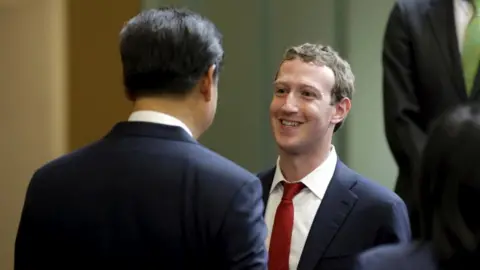
Mr Daniels said CEO Mark Zuckerberg has been public about the company’s interest in offering its services in China, but added. “[T]he fact is this: we do not operate our services in China today.”
Meta does, however, generate advertising revenue from advertisers based in China.
During her testimony before a Senate judiciary subcommittee, Ms Wynn-Williams also alleged the parent company of Facebook and Instagram worked “hand in glove” with Beijing to build censorship tools aimed at silencing critics of the Chinese Community Party.
Specifically, she said Meta capitulated to China’s demands that it delete the Facebook account of Guo Wengui, a Chinese dissident living in the US.
Meta maintains it unpublished Mr Guo’s page and suspended his profile because it violated the company’s Community Standards.
“One thing the Chinese Communist Party and Mark Zuckerberg share is that they want to silence their critics. I can say that from personal experience,” Ms Wynn-Williams said during her testimony.
In March, Ms Wynn-Williams released a memoir called “Careless People” about her experience at the company, which was then called Facebook.
Meta won an emergency ruling in the US that temporarily blocked her from promoting her book, which included several critical claims about her time at the company.
“[T]he false and defamatory book should never have been published,” Meta said at the time.
Wednesday’s hearing before members of the US Senate was led by Senator Josh Hawley, a Republican from Missouri.
Sen Hawley opened the hearing by saying Meta had “stopped at absolutely nothing to prevent” Wednesday’s testimony by Ms Wynn-Williams, who joins Frances Haugen and Arturo Béjar as former employees who have spoken out against the social media giant.
“Why is it that Facebook is so desperate to prevent this witness from telling what she knows?” Hawley said.
At a fiery January 2024 congressional hearing at which Mr Zuckerberg also testified, Sen Hawley demanded that the CEO apologise to families who said their children had been harmed by social media.
Behind Mr Zuckerberg at the 2024 hearing sat a row of families who said their children had self-harmed or killed themselves as a result of social media content.
Mr Zuckerberg turned and told families in the audience that “no one should go through” what they had.
During Wednesday’s hearing, Sen Hawley said Meta had suggested Ms Wynn-Williams could face financial penalties for speaking out.
“They have threatened her with $50,000 in punitive damages every time she mentions Facebook in public, even if the statements that she is making are true,” Sen Hawley alleged. “Even as we sit here today, Facebook is attempting her total and complete financial ruin.”
On Wednesday, the company told the BBC the $50,000 in damages is for each material violation of the separation agreement that she signed when she departed the company in 2017.
Ms Wynn-Williams says Meta told her that creating exceptions to the non-disparagement agreement would “eat the rule,” which Meta later clarified to the BBC was the comment of an arbitrator, not the company.
The company added that she was not restricted from testifying before Congress.
But Meta declined to directly respond to a BBC inquiry about whether Ms Wynn-Williams may indeed face financial penalties initiated by the company or its lawyers for statements she made on Wednesday in front of Congress.
Ms Wynn-Williams told lawmakers that all of this had taken a personal toll on her.
“The last four weeks have been very difficult,” she told members of the Senate committee. “Even the choice to come and speak to Congress is incredibly difficult.”
I hate to date myself; I really do, but guess I have to.
In my lifetime, I have met three people who had suffered from polio infections. All three were women. One a friend, had fortunately only gotten it in one leg. She walked a bit stiffly on that leg, but that was the only noticeable thing. Another women had gotten it in both legs. She was able to reeducate other muscles in her legs. However, she took up running, over-worked the legs and eventually was back on crunches and her husband left her (creep.)
The third was a woman in our church. She had gotten a full body infection and it affected every part of her body to include her organs. She was a small woman, never in very good health and constantly beleaguered with health problems. Each of these individuals were a bit older than me and had contracted the illness in the late 40’s before the Salk vaccine was available.
I remember being in kindergarten when the Salk vaccine was administered at our school. We all lined up in the cafeteria and the nurses had little white cups, each with one sugar cube each, and the vaccine had been dropped on the sugar. We all ate our sugar cubes. I feel comfortable saying I have never known anyone in my generation to contract polio.
Two years ago, I was working with a church group that was assisting individuals from Mexico and Central America coming to this country on sponsorships. All individuals at that time were tested for Covid before they were allowed to enter. I remember that one entire bus came up positive.
About that time, there was also a report of a active case of polio being reported from an immigrant person residing in New York. It was then I went to Walgreens and asked for a polio shot. I was told insurance would not cover it as ‘polio isn’t a problem in this country.’ I told them to give me the shot anyway as there is some concern that the vaccines we given as children might not still be effective. I paid the money and was glad to do so.
As soon as I heard that JFK, Jr., the anti-vaxxer, had been approved as Health Secretary, I dialed up my Walgreen’s account and checked on my vaccines. I have a short list of boosters for this year. I will be sure to get them soon before Medicare starts to tell the pharmacies, “those aren’t covered.”
The advantage for someone like me is that: 1) I have the resources to cover the vaccines even if Medicare doesn’t pay, 2) I know full well what happens to people who don’t get the shots and I will get them regardless.
Not everyone has either this knowledge or these resources. I fear that we are heading into the waters of misery that few of us have ever known. It will be very difficult to re-invent the wheel in these situations. Unfortunately, it is usually the most vulnerable of our society: children and low-income folks who end up paying the price. What’s new.

 Show map of OhioShow map of the United StatesShow all

 webby1dotnet

