“American working men and women have much of which to be proud. Our democracy is based on their good sense and commitment to liberty. It was the hard work and skill of working people that turned a vast American wilderness into the world’s most powerful economy.”
“The great safeguard of our liberty is the totality of the constitutional system, with no one part getting the upper hand.”
“Indeed, I believe that the world of the future can be just that — a world of liberty, a world in which human rights are respected in the political and economic spheres alike.”
Strong leaders don’t fear criticism, but weak ones do.
Support free speech before we start looking like our communist neighbors!!!!!!
China’s rise in the world market led the Chinese diaspora in Africa to make contact with relatives in their homeland. Renewed relations created a portal through which African demand for low-price consumers goods could flow.[18] Chinese businessmen in Africa, with contacts in China, brought in skilled industrial engineers and technicians such as mechanics, electricians, carpenters, to build African industry from the ground up.[19]
The 1995 official Go Global declaration and the 2001 Chinese entry into the WTO paved the way for private citizens in China to increasingly connect with, import from, and export to the budding Sino-African markets.
Expansion of military presence (1990 to the present)
Africa does not stand at the center of China’s security strategies, yet the continent has been and remains a major source for China’s commodity stocks. Africa was also seen as an important bid for international legitimacy against the eastern and western blocks. In the 1960s, China contributed to Africa’s military power by assisting and training liberation groups, such as Mugabe‘s ZANU.
The Chinese military presence in Africa has increased since 1990 when China agreed to join in UN peace-keeping responsibilities.[21] In January 2005, 598 Chinese peace keepers were sent to Liberia. Others were sent to Western Sahara as part of Operation MINURSO,[22]Sierra Leone, the Ivory Coast and the DRC.[21] This was a carefully handled and largely symbolic move, as China did not want to appear as a new colonialist power overly interfering in internal affairs.
China currently has military alliances with 6 African states, 4 of which are major oil suppliers: Sudan, Algeria, Nigeria and Egypt.[21] On the whole, however, China’s influence remains limited,[23] especially when compared with Western powers such as France, whose military involvement in the 2004 Ivory Coast conflict and the 2006 Chad conflict was significant. China is particularly unable to compete with the ex-colonial powers in providing military training and educational programs, given the latter’s continuing ties via military academies like Sandhurst in the UK and Saint Cyr in France.[23]
In 2015, despite growing economic interests in Africa, China has not yet settled any military base on the continent. However, with a naval logistics center is planned to be built in Djibouti raises questions about China’s need to set military bases in Africa. China’s increasing reliance on Africa’s resources warrants it to hold a stronger military position.[24]
Effects of the global economic downturn (2007 to the present)
Since 2009, a switch has been noticed in China’s approach to Africa. The new tack has been to underline long-term stability in light of the worldwide economic crisis.[25]
Some major projects get stopped, such as in Angola, where 2/3 of a US$4 billion CIF fund disappeared, it is unclear where this money went.[26][27] Following this, a major Chinese-backed oil refinery project was scrapped by Angolan officials, with unclear reasons, causing problems for Sino-Angolan relations.[27]
At the dawn of the 21st century, while Africa suffered from China’s withdrawal, it is less dependent of external powers to build a self-reliable economy.[28]
The China Africa Research Initiative estimated that there were over 88,371 Chinese workers in Africa in 2022, down from a high of 263,696 in 2015.[29]
I hate to date myself; I really do, but guess I have to.
In my lifetime, I have met three people who had suffered from polio infections. All three were women. One a friend, had fortunately only gotten it in one leg. She walked a bit stiffly on that leg, but that was the only noticeable thing. Another women had gotten it in both legs. She was able to reeducate other muscles in her legs. However, she took up running, over-worked the legs and eventually was back on crunches and her husband left her (creep.)
The third was a woman in our church. She had gotten a full body infection and it affected every part of her body to include her organs. She was a small woman, never in very good health and constantly beleaguered with health problems. Each of these individuals were a bit older than me and had contracted the illness in the late 40’s before the Salk vaccine was available.
I remember being in kindergarten when the Salk vaccine was administered at our school. We all lined up in the cafeteria and the nurses had little white cups, each with one sugar cube each, and the vaccine had been dropped on the sugar. We all ate our sugar cubes. I feel comfortable saying I have never known anyone in my generation to contract polio.
Two years ago, I was working with a church group that was assisting individuals from Mexico and Central America coming to this country on sponsorships. All individuals at that time were tested for Covid before they were allowed to enter. I remember that one entire bus came up positive.
About that time, there was also a report of a active case of polio being reported from an immigrant person residing in New York. It was then I went to Walgreens and asked for a polio shot. I was told insurance would not cover it as ‘polio isn’t a problem in this country.’ I told them to give me the shot anyway as there is some concern that the vaccines we given as children might not still be effective. I paid the money and was glad to do so.
As soon as I heard that JFK, Jr., the anti-vaxxer, had been approved as Health Secretary, I dialed up my Walgreen’s account and checked on my vaccines. I have a short list of boosters for this year. I will be sure to get them soon before Medicare starts to tell the pharmacies, “those aren’t covered.”
The advantage for someone like me is that: 1) I have the resources to cover the vaccines even if Medicare doesn’t pay, 2) I know full well what happens to people who don’t get the shots and I will get them regardless.
Not everyone has either this knowledge or these resources. I fear that we are heading into the waters of misery that few of us have ever known. It will be very difficult to re-invent the wheel in these situations. Unfortunately, it is usually the most vulnerable of our society: children and low-income folks who end up paying the price. What’s new.
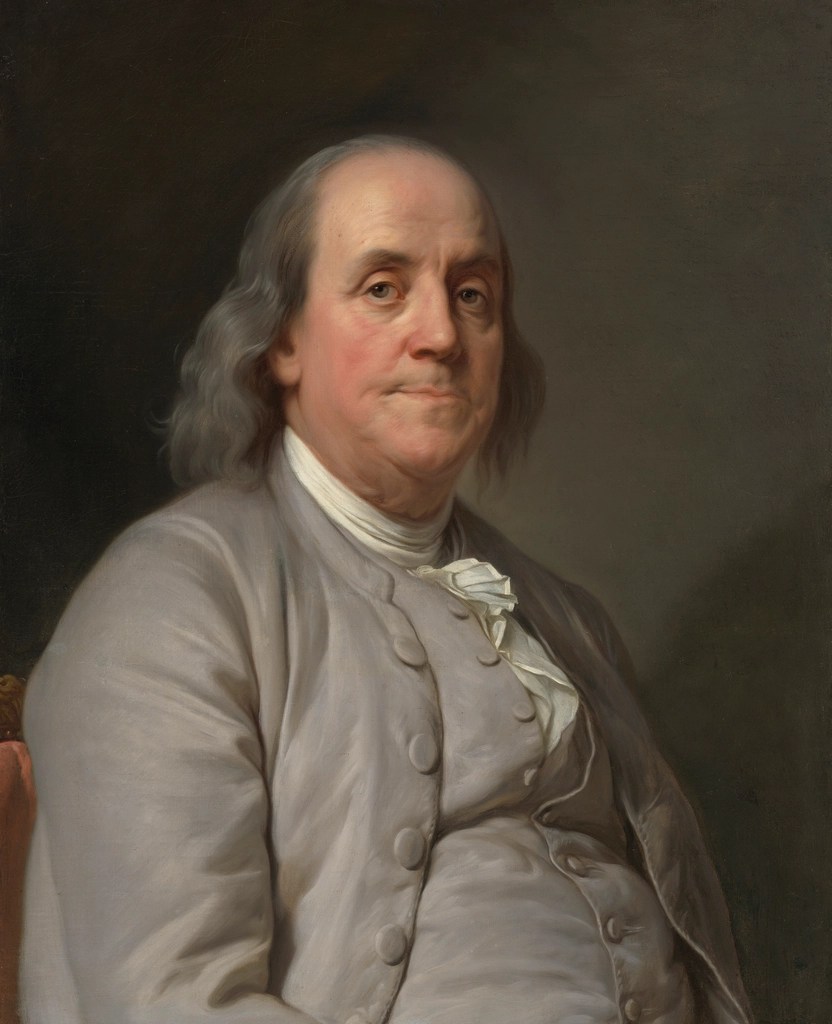
Benjamin Franklin was born the 10th son of the 17 children of a man who made soap and candles, one of the lowliest of the artisan crafts. He learned to read very early and had one year in grammar school and another under a private teacher, but his formal education ended at age 10.
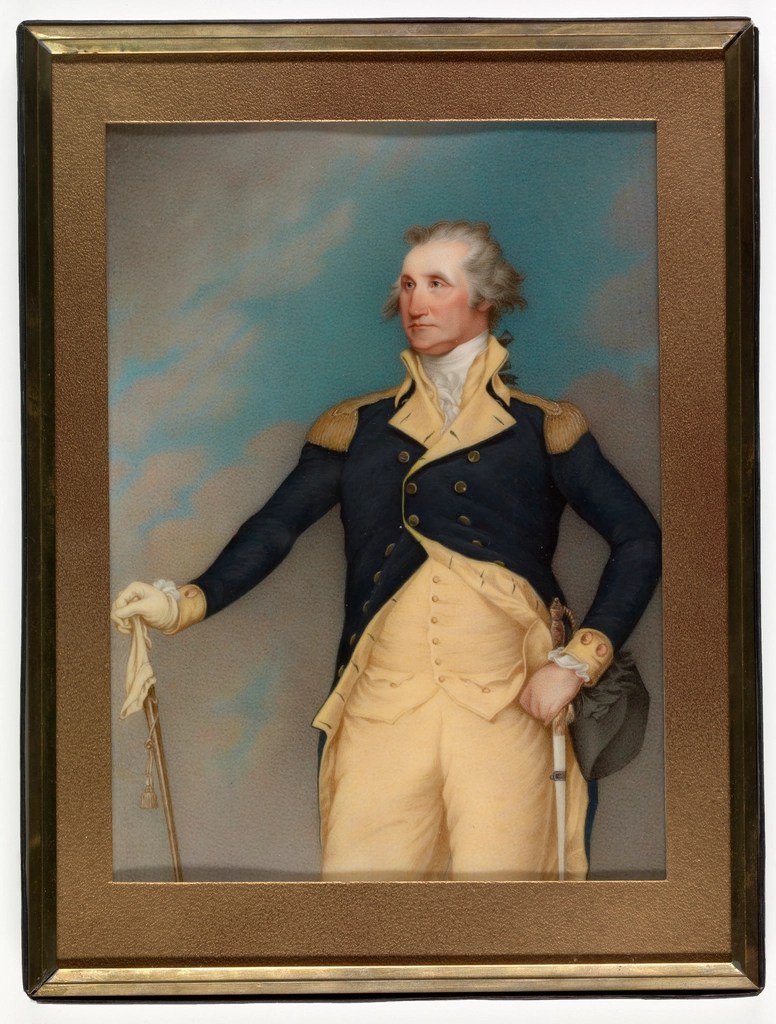
Washington’s Education: Unlike many of his contemporaries, Washington never attended college or received a formal education. His two older half brothers, Lawrence and Augustine, attended Appleby Grammar School in England. However, after the death of their father, the family limited funds for education.
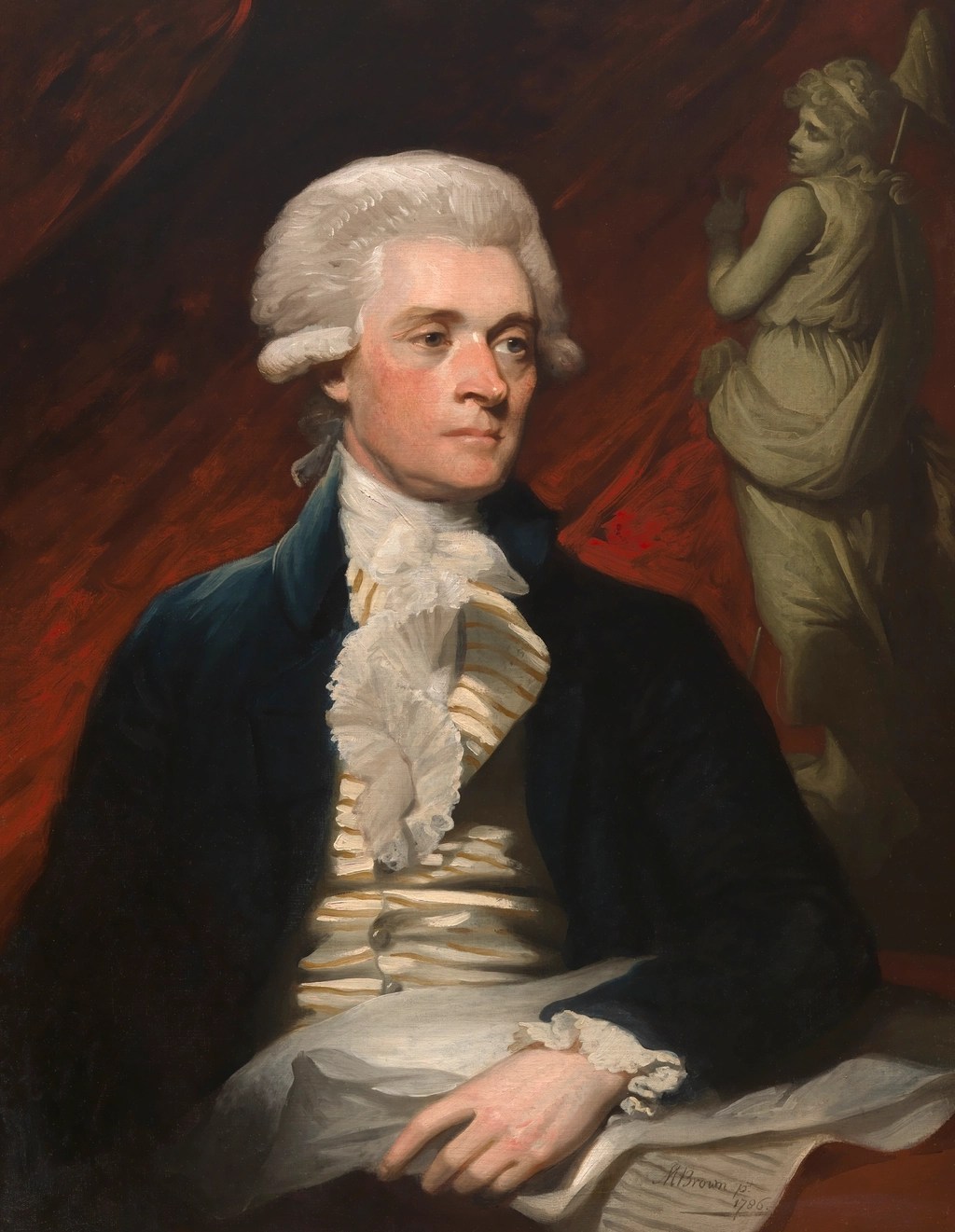
What did Thomas Jefferson study at the College of William and Mary?
Jefferson was instructed in natural philosophy (physics, metaphysics and mathematics) and moral philosophy (rhetoric, logic and ethics). A keen and diligent student, he displayed an avid curiosity in all fields and, according to family tradition, he frequently studied 15 hours a day.
At William & Mary, Jefferson was taught by William Small. A Scotsman who had been educated at Marischal College, Aberdeen, Small had been appointed professor of natural philosophy in 1758. Soon after Jefferson’s arrival, Small also assumed the duties of teaching moral philosophy when that chair was left vacant by the departure of Jacob Rowe. Small introduced Jefferson to the writings of Locke, Bacon, and Newton, and awakened an interest in science in the enthusiastic young student.
It was a turbulent time in the history of W&M, a period characterized by political turmoil, declining discipline and tension between the faculty and the Board of Visitors. Nevertheless, Jefferson thrived under the tutelage of Small. He later wrote: “It was my great fortune, and what probably fixed the destinies of my life that Dr. William Small of Scotland was then professor of mathematics, a man profound in most of the useful branches of science, with a happy talent of communication, correct and gentlemanly manners and an enlarged and liberal mind.”
Jefferson’s course of study at W&M lasted for two years, and he then went on to read law for the next five years under George Wythe, the distinguished jurist who was to become the first professor of law at William & Mary in 1779. Jefferson referred to Wythe as “my earliest and best friend,” adding that “to him I am indebted for first impressions which have had the most salutary influence on the course of my life.” Through Wythe and Small, Jefferson met Governor Francis Fauquier, and he frequently joined the three older men as they dined together at the Governor’s Palace. Jefferson—who said that music was “the favorite passion of my soul”—was also invited to take part in Palace musicales, playing the violin or cello.
Dumas Malone, Jefferson’s 20th-century biographer, wrote that the story of Jefferson’s student days in Williamsburg “is the story of the…first flowering of an extraordinary mind.” As a student at William & Mary, young Jefferson had an ideal vantage point from which to observe and be taught by the leaders of the colony as he prepared to take his place among them.